
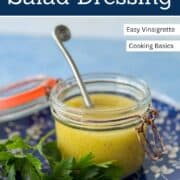

This white wine vinaigrette is a bright, simple salad dressing made with pantry staples like olive oil, Dijon mustard, and white wine vinegar. It takes just a few minutes to whisk together and adds a fresh, tangy flavor to salads, grain bowls, and roasted vegetables.

A good homemade vinaigrette is one of the easiest ways to bring a salad to life. This white wine vinaigrette salad dressing has the perfect balance of tangy vinegar, smooth olive oil, and a touch of honey to round out the acidity.
We love making simple dressings like this at home because they're quick, customizable, and taste so much fresher than store-bought versions. Once you know the basic technique, you can easily adjust the flavors to suit different salads or seasonal ingredients.
Scroll down for step-by-step photos, helpful tips, and fun flavor variations!
Jump to:
- Why You'll Love This White Wine Vinaigrette
- Ingredients You'll Need
- White Wine Vinegar vs White Vinegar: What's the Difference?
- How to Make White Wine Vinaigrette
- Basic Vinaigrette Ratio
- Flavor Variations, Substitutions and Add-Ins
- What to Serve with White Wine Vinaigrette
- Storage Instructions
- FAQ's
- More Salad Dressing Recipes
- White Wine Vinaigrette Recipe
Why You'll Love This White Wine Vinaigrette
- Quick and easy: Ready in about 5 minutes with just a handful of ingredients.
- Bright and balanced: The white wine vinegar adds a light tang, while Dijon mustard helps create a smooth emulsion.
- Versatile: Perfect for green salads, grain bowls, pasta salads, or as a simple marinade.
- Made with pantry staples: Everything you need is likely already in your kitchen.
Ingredients You'll Need
This simple white wine vinegar vinaigrette uses just a few ingredients, but each one plays an important role in building flavor and texture.

- White wine vinegar - The star of the dressing. It provides a clean, bright acidity that works beautifully in lighter salads.
- Dijon mustard - Adds subtle flavor and helps the dressing emulsify so the oil and vinegar stay combined.
- Honey or maple syrup - A small amount balances the acidity of the vinegar.
- Salt and freshly ground black pepper - Essential for bringing all the flavors together.
- Extra virgin olive oil - The base of the dressing, adding richness and smooth texture.
See the recipe card for quantities.
White Wine Vinegar vs White Vinegar: What's the Difference?
Although they sound similar, white wine vinegar and white vinegar are quite different in flavor and how they're used in cooking.
White wine vinegar
- Made from fermented white wine
- Light, fruity acidity
- Commonly used in vinaigrettes and salad dressings
White vinegar
- Distilled vinegar made from grain alcohol
- Much sharper and more acidic
- Often used for pickling, cleaning, or preserving
For salad dressings like this white wine vinaigrette with Dijon, white wine vinegar is usually the better choice because it has a more delicate, balanced flavor.
If you're curious to learn more about how these vinegars differ, you can read this helpful guide from MasterClass: "Are White Wine Vinegar and White Vinegar the Same?"
How to Make White Wine Vinaigrette
This salad dressing with white wine vinegar comes together in just a few simple steps
Build the base
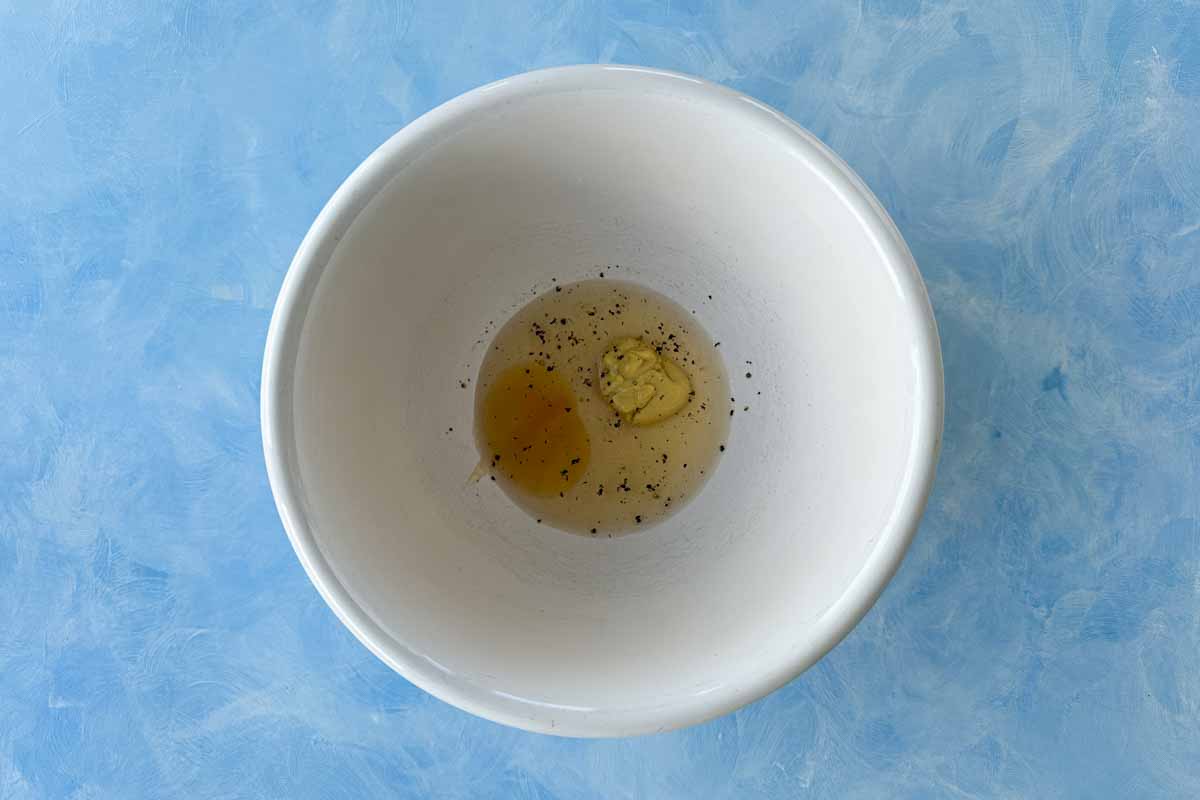
In a small bowl or jar, whisk together the white wine vinegar, Dijon mustard, honey (or maple syrup), salt, and freshly ground black pepper.
Emulsify the dressing
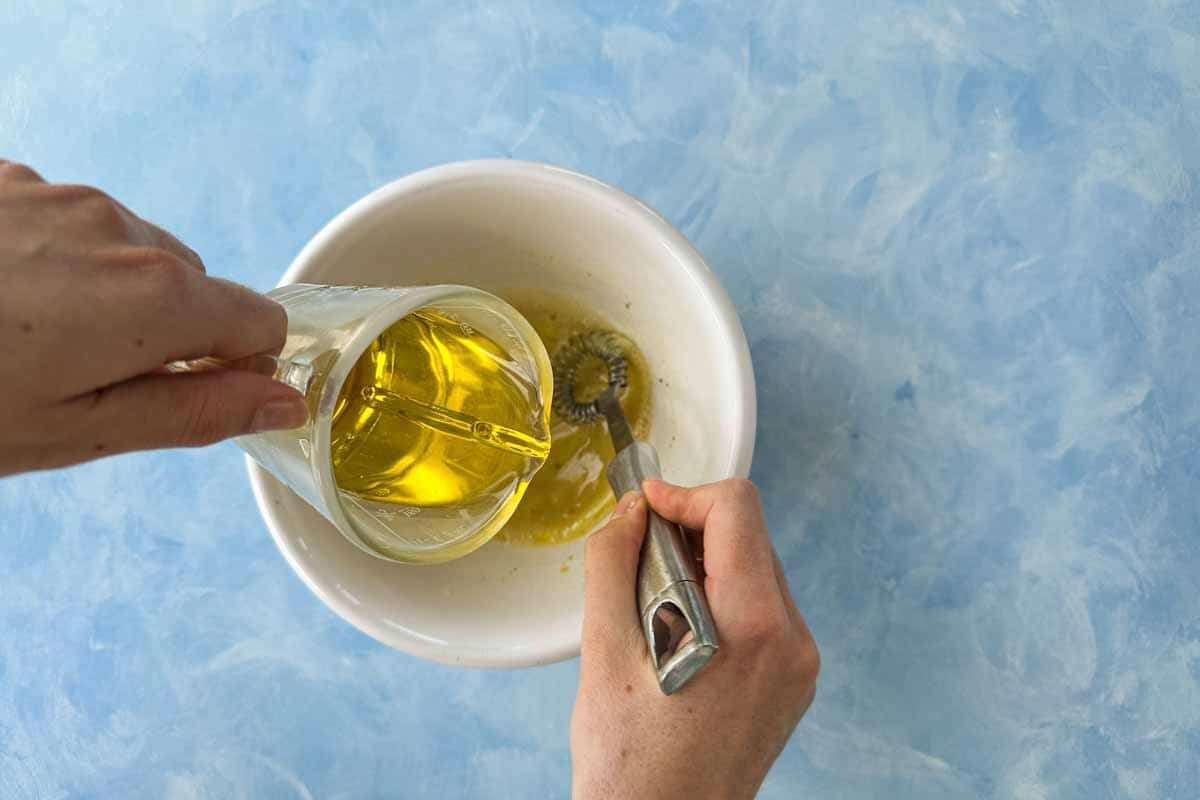
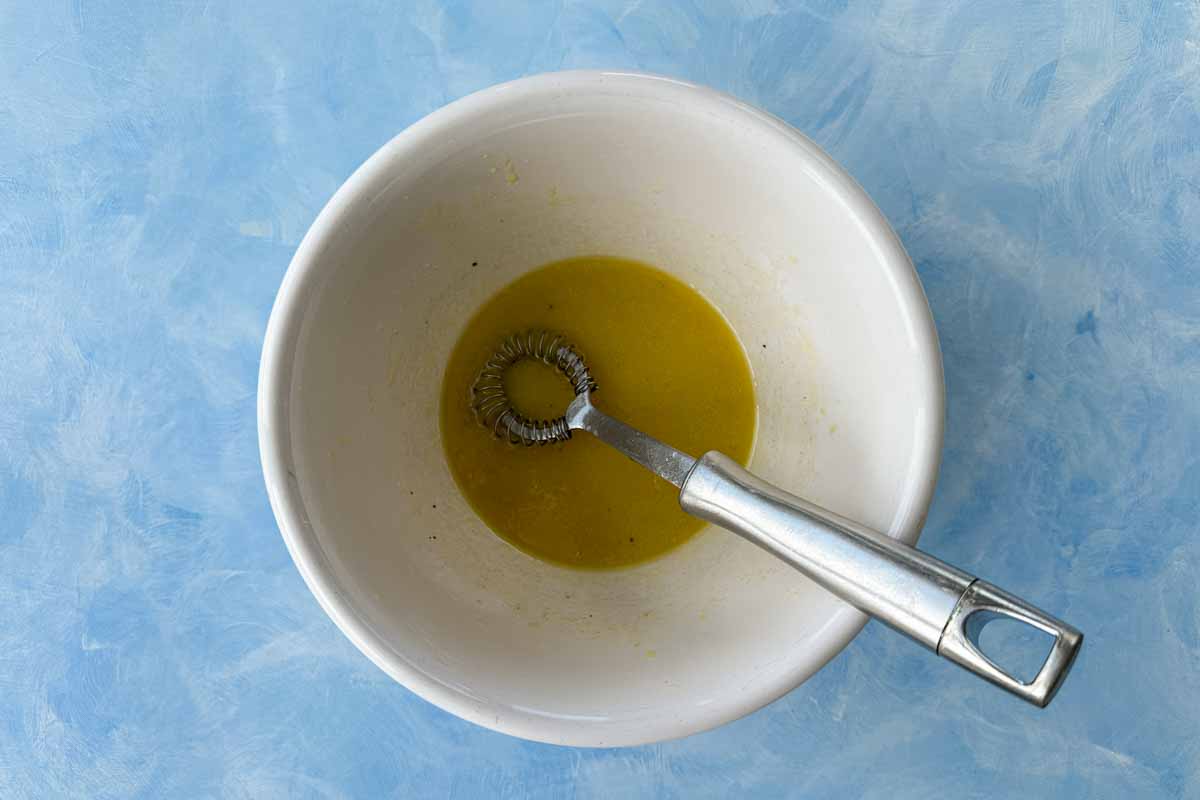
Slowly drizzle in the olive oil while whisking continuously until the dressing thickens and becomes glossy. Alternatively, seal everything in a jar and shake vigorously.
Chef's Tip: Always combine the vinegar and mustard first before adding the oil - this helps the dressing emulsify properly and prevents it from separating too quickly.
Taste and adjust
Taste the dressing and adjust the seasoning if needed. Add a little more honey or maple syrup if you prefer a slightly sweeter balance.
Basic Vinaigrette Ratio
A classic vinaigrette follows a simple ratio of 3 parts oil to 1 part vinegar. This balance creates a dressing that is smooth and well-rounded without tasting too sharp or too oily.
For example:
- 3 tablespoons olive oil
- 1 tablespoon vinegar
From there, you can add flavorings like mustard, honey, garlic, herbs, or lemon juice to customize the dressing.
This white wine vinaigrette follows the same basic principle, with Dijon mustard helping the oil and vinegar emulsify into a smooth, glossy dressing.
Chef's Tip: If you prefer a brighter, more tangy dressing, reduce the oil slightly. For a milder dressing, add a little more olive oil.

Flavor Variations, Substitutions and Add-Ins
Once you know the basic formula for a vinaigrette, it's easy to adjust the flavors depending on the salad you're serving. Here are a few simple ways to customize this white wine vinaigrette.
- Add fresh herbs - Finely chopped parsley, dill, chives, or basil add freshness and work especially well in spring and summer salads.
- Add garlic or shallot - A small clove of minced garlic or a spoonful of finely chopped shallot gives the dressing a deeper savory flavor.
- Use maple syrup instead of honey - Maple syrup works beautifully if you prefer a vegan option or want a slightly richer sweetness.
- Add lemon juice - A squeeze of fresh lemon brightens the dressing even more and pairs nicely with seafood or Mediterranean-style salads.
- Swap the mustard - Whole grain mustard can be used instead of Dijon for a slightly milder flavor and a bit of texture.
- Try a different vinegar - You can also use red wine vinegar, champagne vinegar, or apple cider vinegar for a slightly different flavor profile.
- Make it creamier - Whisk in a small spoonful of Greek yogurt or tahini for a creamier dressing with extra body.
What to Serve with White Wine Vinaigrette
This white wine vinaigrette pairs beautifully with fresh salads, grain bowls, and simple Mediterranean-style dishes. We especially love it with crisp vegetable salads and Mediterranean-style bowls where the bright acidity balances richer ingredients.
- Fresh salads - Drizzle it over salads like Cucumber Feta Salad, Apple, Beet, and Blue Cheese Salad, Mediterranean Chicken Salad, or a simple green salad with mixed leaves, shaved vegetables, and toasted nuts.
- Grain bowls and pasta salads - Toss with cooked bulgur wheat, quinoa, or orzo to add brightness and balance to grain bowls and Mediterranean-style pasta salad.
- As a marinade - This vinaigrette also works beautifully as a quick marinade for chicken, shrimp, or grilled vegetables before cooking.
Storage Instructions
- Fridge: Store the dressing in an airtight glass jar in the refrigerator for up to 1 week. The olive oil may solidify slightly in the fridge. Let the vinaigrette come to room temperature and give it a good shake to re-emulsify before using.
- Meal prep: This dressing is perfect for weekly meal prep. Make a batch at the beginning of the week and use it for salads, grain bowls, or roasted vegetables.
- Freezer: This dressing is not freezer friendly.
FAQ's
A : A classic vinaigrette ratio is 3 parts oil to 1 part vinegar. This creates a balanced dressing that isn't too acidic or too oily.
A : Some common mistakes include:
* Adding the oil too quickly without whisking
* Not seasoning the dressing properly
* Using low-quality olive oil or harsh vinegar
Whisking slowly and tasting as you go will help create a well-balanced dressing.
A : Look for a good quality white wine vinegar made from fermented white wine. It should taste bright and slightly fruity rather than harsh or overly acidic.
Many grocery stores carry excellent options.
Brands like Maille white wine vinegar are widely available and work well for homemade vinaigrettes.
More Salad Dressing Recipes
If you enjoy homemade vinaigrettes, you may also like our:
- Greek Vinaigrette
- Balsamic Vinaigrette
- Lemon Vinaigrette
- Apple Cider Vinaigrette
- Creamy Lemon Tahini Yogurt Dressing

If you try this White Wine Vinaigrette Recipe, we'd love to hear how you used it. Leave a comment below or share it with a friend who enjoys simple homemade salad dressings! Don't forget to pin this recipe for later!
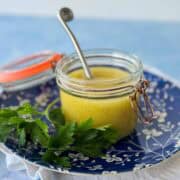
White Wine Vinaigrette Recipe
- Total Time: 5 minutes
- Yield: About ¾ cup (180 ml)
- Diet: Vegetarian
Description
This white wine vinaigrette is a bright, simple salad dressing made with pantry staples like olive oil, Dijon mustard, and white wine vinegar. It takes just a few minutes to whisk together and adds a fresh, tangy flavor to salads, grain bowls, and roasted vegetables.
Ingredients
3 tablespoon (45 ml) white wine vinegar
1 teaspoon Dijon mustard
½-1 teaspoon honey or maple syrup, to taste
Salt and freshly ground black pepper, to taste
½ cup (125 ml) extra virgin olive oil
Instructions
In a small bowl or jar, whisk together the white wine vinegar, Dijon mustard, honey (or maple syrup), salt, and pepper.
Slowly drizzle in the olive oil while whisking continuously until thickened and glossy.
Alternatively, seal in a jar and shake vigorously.
Chef's Tip: Always combine the vinegar and mustard first before adding the oil - this helps the dressing emulsify properly and prevents it from separating too quickly.
Adjust seasoning to taste. Add a little more sweetness if needed to balance the acidity. Store in an airtight glass jar in the fridge for up to 1 week. Shake well before using.
Notes
Storage Instructions
Fridge: Store in an airtight glass jar in the refrigerator for up to 1 week. Let the dressing sit at room temperature for a few minutes if the olive oil solidifies, then shake or whisk well before using.
Make Ahead and Meal Prep Instructions: This vinaigrette is perfect for meal prep. Make a batch at the beginning of the week and use it throughout the week for salads, grain bowls, roasted vegetables, or marinades.
- Prep Time: 5 minutes
- Category: Dressing
- Method: Whisked / No-cook
- Cuisine: Mediterranean
Nutrition
- Serving Size: 1 serving
- Calories: 246
- Sugar: 0.7 g
- Sodium: 33.4 mg
- Fat: 28 g
- Carbohydrates: 0.7 g
- Protein: 0 g
- Cholesterol: 0 mg
The nutrition is an estimate only. It was calculated using Nutrifox, an online nutrition calculator.


Leave a Reply