
This homemade pomegranate molasses is sweet, tart, fruity, and beautifully glossy. Made with just pomegranate juice, brown sugar, and lemon, it adds concentrated pomegranate flavor to salad dressings, marinades, roasted vegetables, meats, and appetizers.
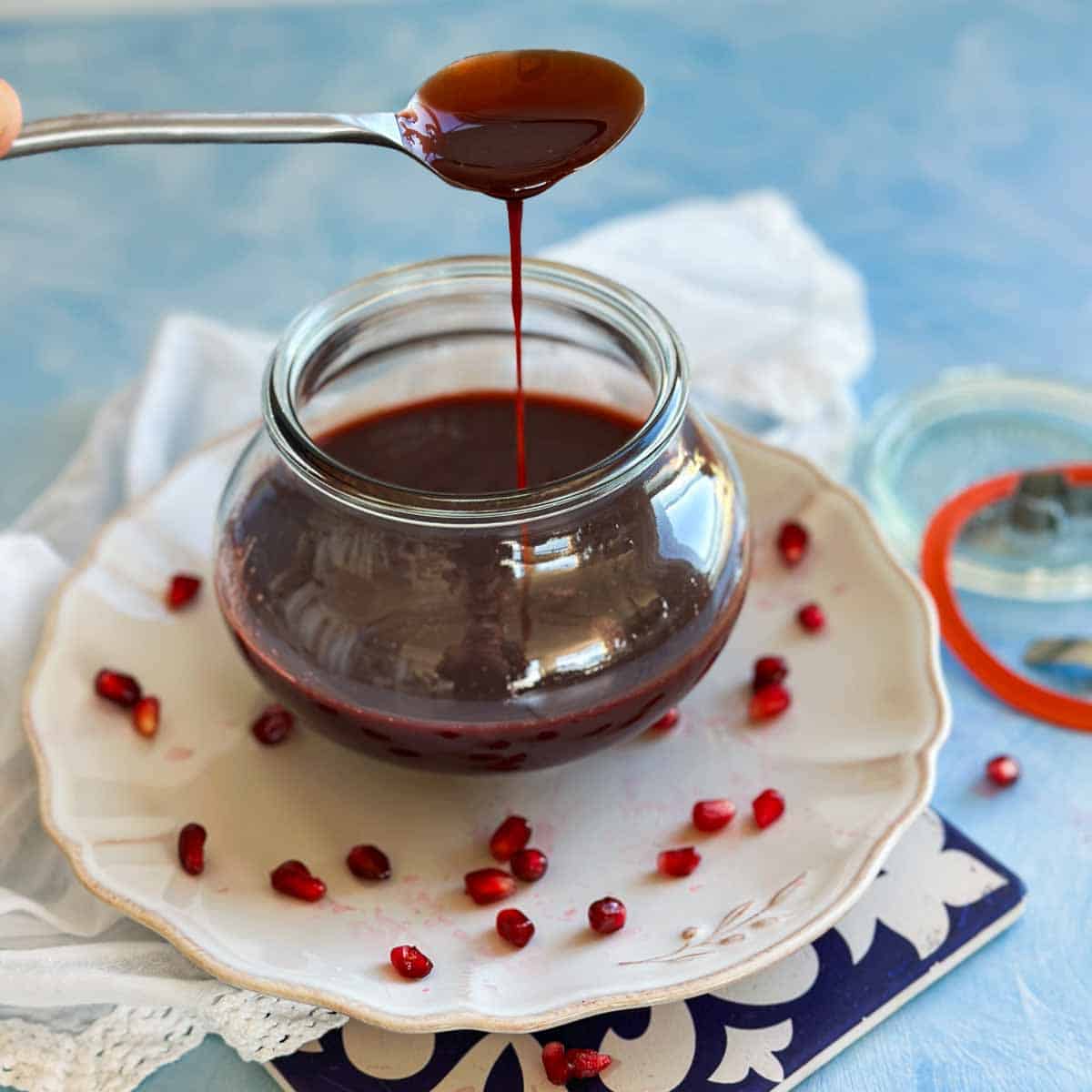
Homemade Pomegranate Molasses
Pomegranate molasses is one of those ingredients where a little goes a long way. Just a spoonful adds a lovely sweet-tart flavor to dressings, marinades, glazes, and roasted vegetables.
Grant described this homemade version as "addictively tangy" - which is quite something coming from someone who is particularly sensitive to sour flavors. 😀
Just like our homemade za'atar, once we made our own pomegranate molasses, we started trying it on almost everything. We have a Pomegranate Molasses Dressing, pear appetizer skewers, Pomegranate Molasses Salmon, and a chicken recipe coming your way soon.
Our version uses pomegranate juice, brown sugar, and fresh lemon juice for a slightly sweeter, syrupy result with balanced acidity. The most important thing to know is not to reduce it until it looks as thick as you want while hot. It thickens as it cools, so remove it from the heat while still pourable.
Scroll down for step-by-step instructions, chef's tips, consistency cues, serving ideas, and storage tips
Jump to:
- Homemade Pomegranate Molasses
- Recipe at a Glance
- What is Pomegranate Molasses?
- What Does Pomegranate Molasses Taste Like?
- Ingredients You'll Need
- How to Make Pomegranate Molasses
- How Do You Know When Pomegranate Molasses Is Done?
- How to Use Pomegranate Molasses
- What Can I Substitute for Pomegranate Molasses?
- Storage Instructions
- FAQ's
- More Mediterranean Kitchen Staples
- Homemade Pomegranate Molasses
Recipe at a Glance
- Makes: About 250 ml (1 cup)
- Starting liquid: 1 litre (4 cups) pomegranate juice
- Main ingredients: 100% Pomegranate juice, brown sugar, and lemon
- Dietary information: Vegan, vegetarian, dairy-free, and gluten-free
- Perfect for: Dressings, marinades, roasted vegetables, meats, fish, and appetizers
- Cooking method: Stovetop reduction
What is Pomegranate Molasses?
Pomegranate molasses is a concentrated pomegranate condiment made by slowly reducing 100% pomegranate juice until it becomes intensely flavored and syrupy.
It's widely used in Middle Eastern and Mediterranean cooking and has a distinctive balance of fruitiness, sweetness, and acidity.
Recipes vary. Some are made using only pomegranate juice, while others include sugar and lemon. Our homemade version uses all three for a sweet-tart, pourable sauce with a little more body.
Despite the name, pomegranate molasses isn't the same as dark cane molasses. It has a brighter, fruitier, much more tart flavor.
What Does Pomegranate Molasses Taste Like?
Pomegranate molasses has a concentrated sweet-tart pomegranate flavor with fruity acidity and a slightly sharp finish.
Our version has enough brown sugar to balance the tartness without turning it into a very sweet syrup, while the fresh lemon juice keeps the flavor bright.
As the pomegranate juice reduces, its flavor becomes much more concentrated, so always start with juice that tastes good on its own.
Ingredients You'll Need
You only need three ingredients to make homemade pomegranate molasses:
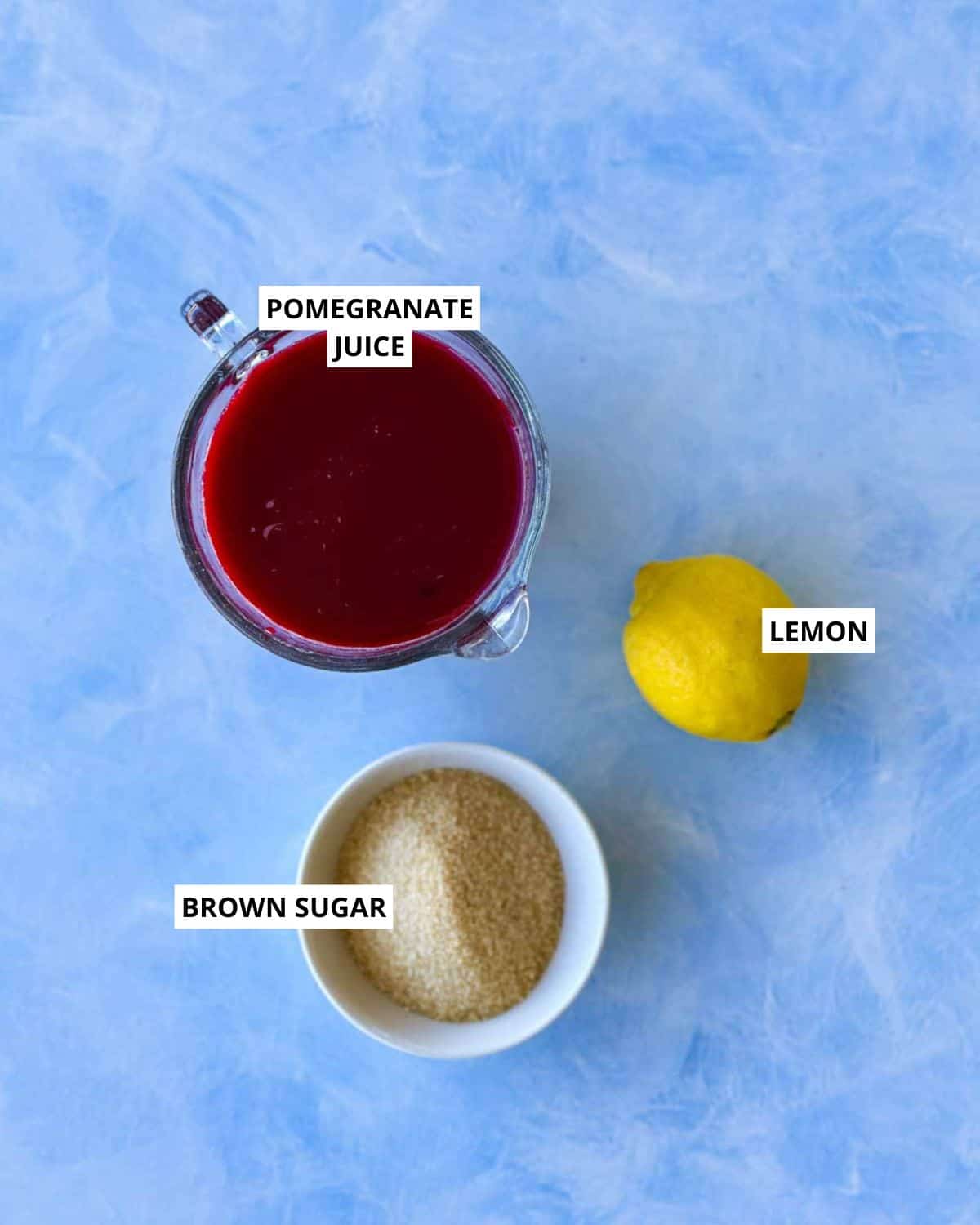
- Pomegranate juice - Use 100% pomegranate juice rather than a juice blend. The flavor becomes much more concentrated as it reduces.
- Brown sugar - Balances the tart pomegranate juice and gives the finished molasses sweetness and body.
- Fresh lemon juice - Adds brightness and helps balance the sweetness.
See the recipe card for quantities
How to Make Pomegranate Molasses
Making pomegranate molasses is simple. The most important part is knowing when to stop reducing it.
Combine the ingredients
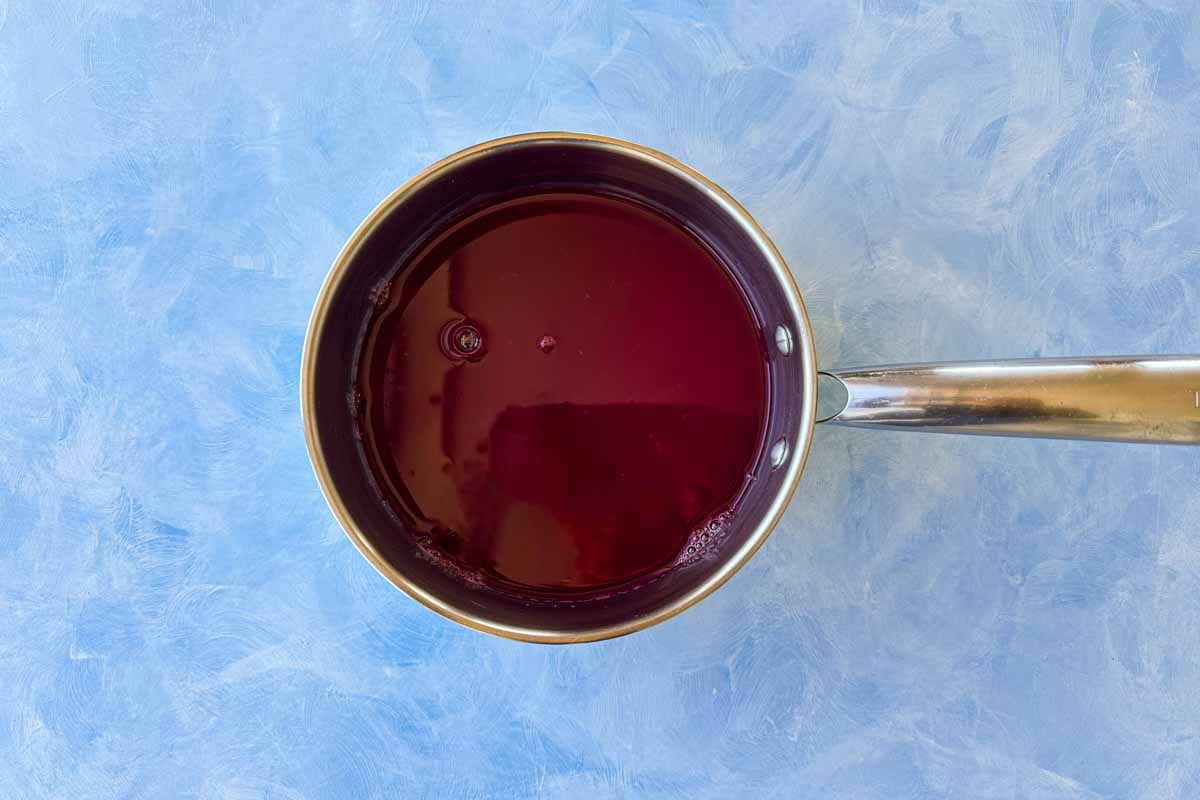
Add the pomegranate juice, brown sugar, and lemon juice to a medium, heavy-bottomed saucepan. Stir to combine.
Dissolve the sugar
Place the saucepan over medium heat and stir until the sugar has dissolved.
Chef's Tip: A wider saucepan helps the juice reduce a little faster. Just keep an eye on it near the end so it doesn't catch.
Simmer the molasses
Bring the mixture to a gentle boil, then reduce the heat to a steady simmer. Cook for 30 -40 minutes, stirring occasionally, until the mixture has reduced to about 1 cup (250 ml).
Check the consistency
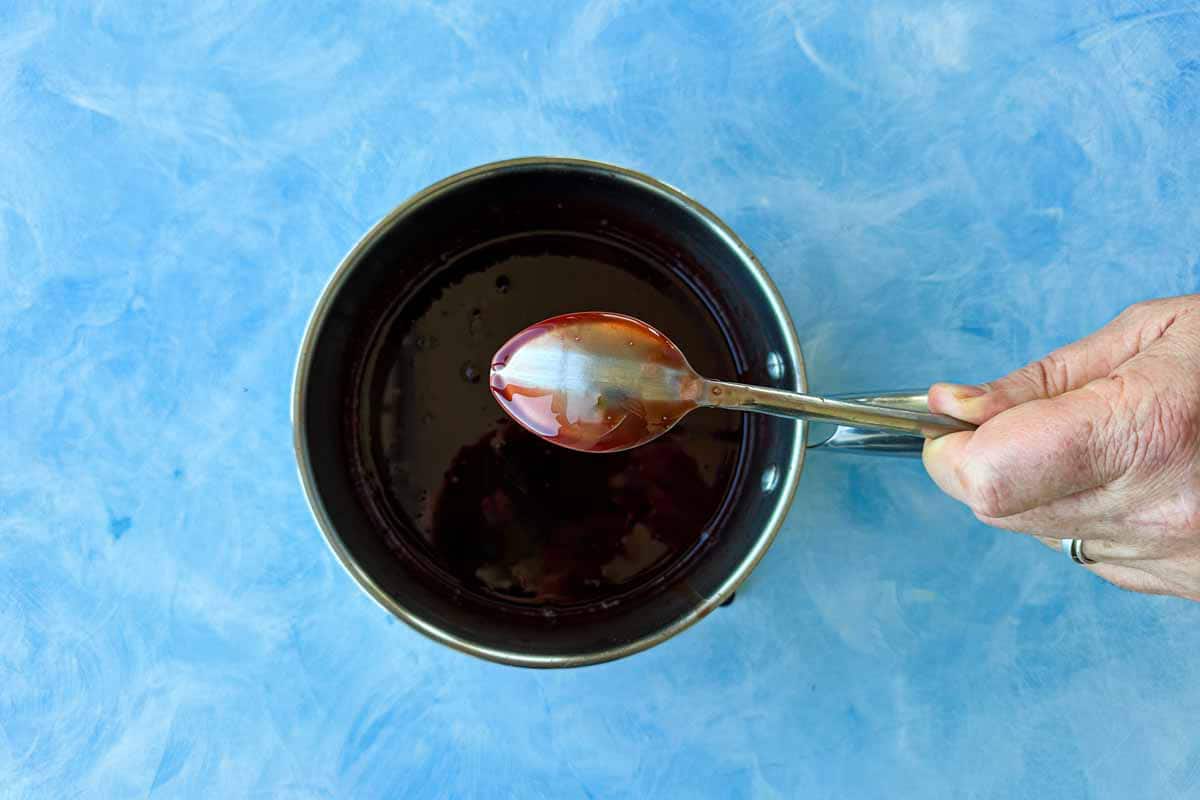
The pomegranate molasses is ready when it lightly coats the back of a spoon. It should look syrupy, but not as thick as honey while it is still hot.
Chef's Tip: Don't reduce it too far. It will thicken as it cools, so take it off the heat while it is still pourable.
Cool and store
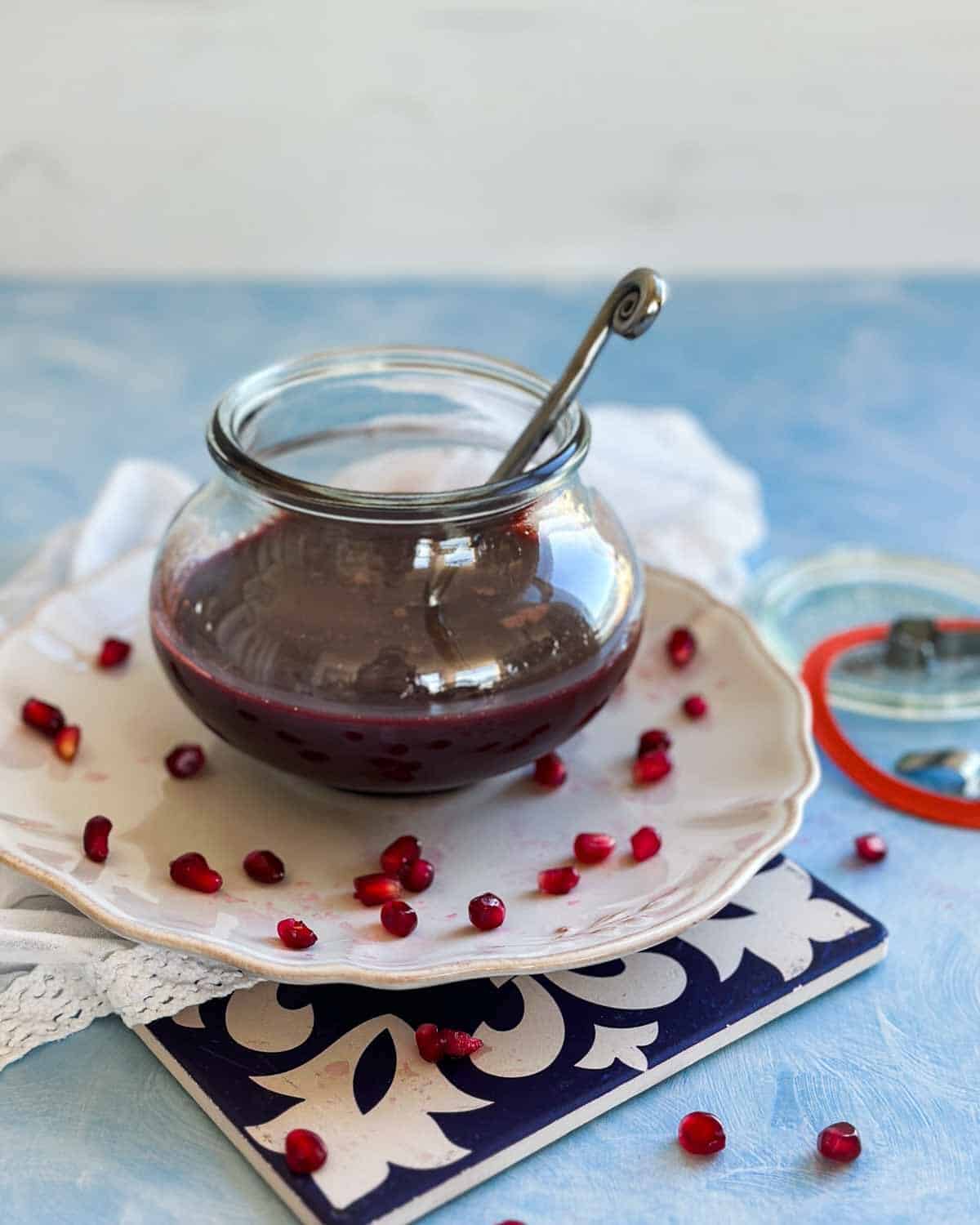
Remove from the heat and let it cool for 10-15 minutes. Pour into a clean glass jar, cool completely, then seal and refrigerate.
How Do You Know When Pomegranate Molasses Is Done?
The clock is useful, but volume and consistency are better guides.
Look for these signs:
- The mixture has reduced from approximately 1 litre (4 cups) to 250 ml (1 cup).
- It lightly coats the back of a spoon.
- It is syrupy but still flows freely while hot.
Reduction time varies depending on your saucepan and how steadily the mixture simmers. Watch it more closely as the volume decreases, since it can thicken quickly near the end.
If it seems thin while hot, let it cool before reducing it further. It thickens considerably as it cools. If it is still too thin once completely cooled, return it to the saucepan and simmer gently for a little longer.
How to Use Pomegranate Molasses
Pomegranate molasses works in both savory and sweet dishes, and you usually only need a small amount to add plenty of flavor.
- Salad dressings - Try our Pomegranate Molasses Dressing for an easy sweet-tart vinaigrette.
- Salads - Use the dressing in our Roasted Butternut Squash Salad with Feta and Pomegranate or Pear and Pecan Salad.
- Fish - Brush over our Pomegranate Molasses Salmon as a glossy sweet-tart glaze.
- Chicken and meat - Add it to marinades or glazes for chicken, lamb, or meatballs.
- Roasted vegetables - Add a little to dressings or glazes for roasted butternut squash cubes, carrots, eggplant, or other vegetables.
- Appetizers - Drizzle over pear appetizer skewers, hummus, labneh, or muhammara.
- Something sweet - Try a small drizzle over Greek yogurt, vanilla ice cream, or fresh fruit.
- Drinks - A little can also add fruity acidity to cocktails and mocktails.
If you don't feel like making it from scratch, a good-quality bottled pomegranate molasses is a handy pantry option.
What Can I Substitute for Pomegranate Molasses?
There isn't a perfect substitute for pomegranate molasses because of its distinctive sweet-tart flavor.
If you have pomegranate juice, reduce it to make a quick substitute. Another tart fruit reduction may also work, but the flavor will be different.
Avoid substituting balsamic glaze 1:1, as it has a very different flavor profile.
Storage Instructions
Fridge: Store homemade pomegranate molasses in a clean, airtight jar in the refrigerator for up to 1 month.
Make ahead: You can make it well ahead of recipes that call for pomegranate molasses, which makes it handy to keep in the fridge for dressings, marinades, and glazes.
After chilling: The molasses will become thicker in the refrigerator. Let it stand at room temperature briefly if you want a more pourable consistency before using.
FAQ's
A : Yes. Pomegranate molasses can be made by reducing 100% pomegranate juice without added sugar.
Our version includes brown sugar because we prefer the slightly sweeter, more syrupy result. If you leave it out, expect a sharper, more tart pomegranate flavor.
A : Yes. Bottled pomegranate juice works well, but use 100% pomegranate juice rather than a juice blend.
Because the juice reduces considerably during cooking, its flavor becomes much more concentrated, so choose one that tastes good on its own.
A : Yes. Once completely cooled, transfer the pomegranate molasses to a clean, airtight jar and store it in the refrigerator.
Our homemade version can be refrigerated for up to 1 month.
More Mediterranean Kitchen Staples
If you enjoy making your own Mediterranean-inspired pantry staples, try our:
- Preserved Lemons
- Lebanese 7 Spice Blend
- Homemade Za'atar Spice Blend
- Balsamic Glaze
- Homemade Basil Pesto
- Homemade Italian Seasoning Blend
Once you've made your pomegranate molasses, put it straight to work in our 5-minute Pomegranate Molasses Dressing, then use that dressing in our Roasted Butternut Squash Salad with Feta and Pomegranate.
Give the recipe a try and let us know how you used it. And don't forget to Pin it for later!
Print
Homemade Pomegranate Molasses
- Total Time: 1 hour 20 minutes
- Yield: Makes about 1 cup / 250 ml 1x
- Diet: Vegetarian
Description
This homemade pomegranate molasses* is sweet, tart, fruity, and beautifully glossy. Made with just pomegranate juice, brown sugar, and lemon, it adds concentrated pomegranate flavor to salad dressings, marinades, roasted vegetables, meats, and appetizers.
Ingredients
4 cups (1 litre) 100% pomegranate juice
¾ cup (150 g) packed brown sugar
Juice of 1 lemon (about 2 tbsp)
Instructions
1. Combine the ingredients.
Add the pomegranate juice, brown sugar, and lemon juice to a medium, heavy-bottomed saucepan. Stir to combine.
2. Dissolve the sugar.
Place the saucepan over medium heat and stir until the sugar has dissolved.
Chef's Tip: A wider saucepan helps the juice reduce a little faster. Just keep an eye on it near the end so it doesn't catch.
3. Simmer the molasses.
Bring the mixture to a gentle boil, then reduce the heat to a steady simmer. Cook for 30 -40 minutes, stirring occasionally, until the mixture has reduced to about 1 cup (250 ml).
4. Check the consistency.
The pomegranate molasses is ready when it lightly coats the back of a spoon. It should look syrupy, but not as thick as honey while it is still hot.
Chef's Tip: Don't reduce it too far. It will thicken as it cools, so take it off the heat while it is still pourable.
5. Cool and store.
Remove from the heat and let it cool for 10-15 minutes. Pour into a clean glass jar, cool completely, then seal and refrigerate.
Notes
Use 100% pomegranate juice for the best flavor.
The flavor should be sweet, tart, and slightly sharp.
Store in a clean jar in the fridge for up to 1 month.
Use it for salad dressings, marinades, roasted vegetables, grilled meats, or drizzling over appetizers.
- Prep Time: 5 minutes
- Cook Time: 60-75 minutes
- Category: Condiment / Sauce
- Method: Stovetop Reduction
- Cuisine: Middle Eastern / Mediterranean
Nutrition
- Serving Size: 1 tablespoon serving
- Calories: 70
- Sugar: 17 g
- Sodium: 8.3 mg
- Fat: 0.2 g
- Carbohydrates: 17.6 g
- Protein: 0.1 g
- Cholesterol: 0 mg
The nutrition is an estimate only. It was calculated using Nutrifox, an online nutrition calculator.



Leave a Reply