

This traditional Greek salad, also known as Horiatiki, is a fresh Mediterranean side dish made with ripe tomatoes, crisp cucumber, olives, and creamy feta. Dressed simply with olive oil and a touch of red wine vinegar, it's light, vibrant, and ready in just 15 minutes.
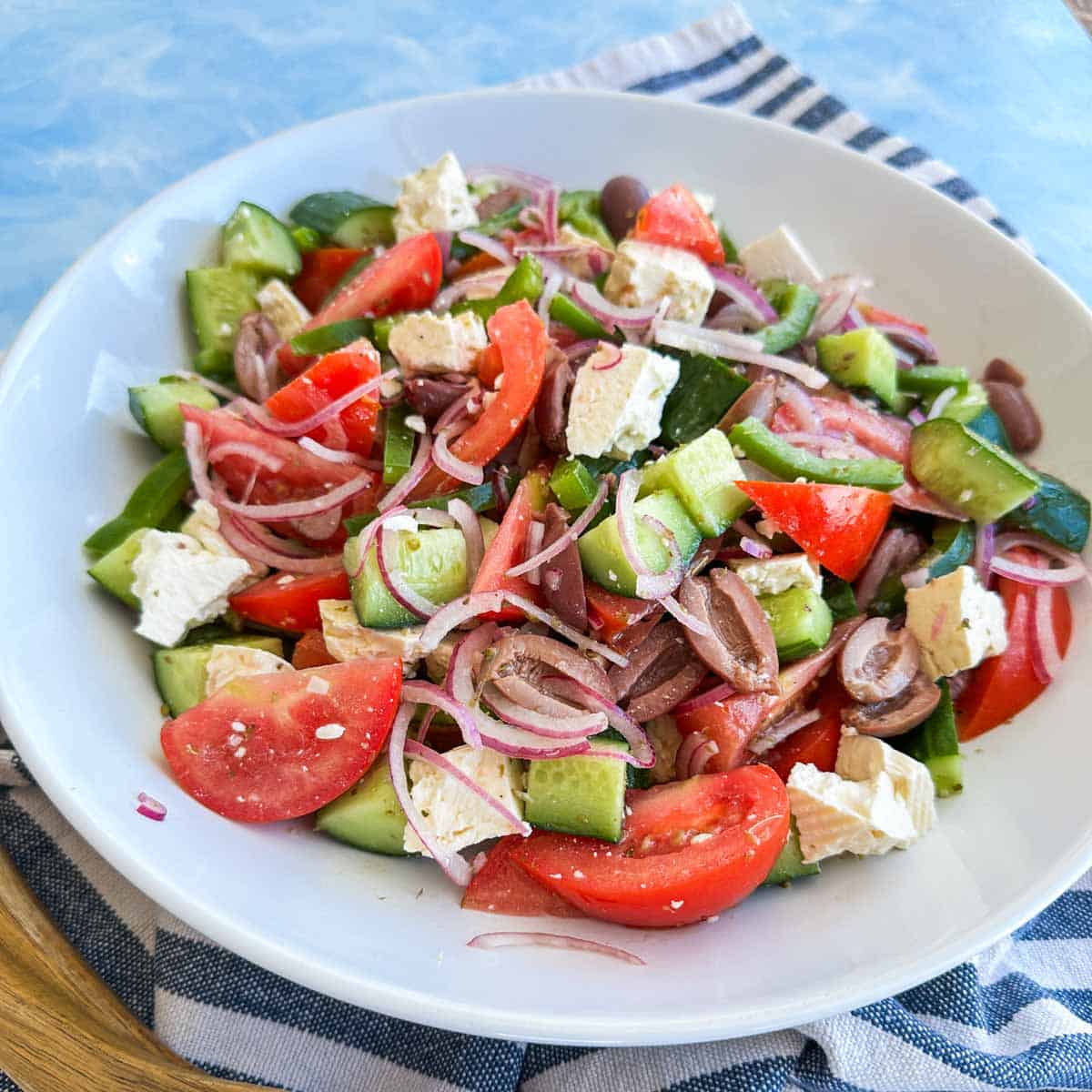
A classic Greek salad is one of those recipes that proves simple ingredients can create something truly special. The combination of juicy tomatoes, crunchy vegetables, salty olives, and rich feta creates a beautiful balance of flavors and textures.
We love serving this traditional Greek salad alongside grilled meats, roast dishes, or as part of a mezze-style spread. It comes together in minutes and works perfectly as a side dish, light lunch, or summer salad for entertaining.
Scroll down for step-by-step instructions, helpful tips, and easy variations!
Jump to:
- Why You'll Love This Traditional Greek Salad
- What Is a Traditional Greek Salad (Horiatiki)?
- Ingredients You'll Need
- Seasonality: When Are the Greek Salad Ingredients at Their Best?
- How to Make Greek Salad
- Flavor Variations, Substitutions and Add-Ins
- What to Serve with Greek Salad
- Best Wine Pairings
- Storage Instructions
- FAQ's
- More Salad Recipes
- Traditional Greek Salad
Why You'll Love This Traditional Greek Salad
- Fresh and vibrant - Made with simple, seasonal ingredients
- Quick to make - Ready in just 15 minutes
- Authentic flavors - Inspired by classic Greek Horiatiki
- Perfect for warm weather - Light, refreshing, and satisfying
- Versatile - Works as a side dish, lunch, or part of a larger spread
What Is a Traditional Greek Salad (Horiatiki)?
Traditional Greek salad, known as Horiatiki (pronounced hor-ee-ah-TEE-kee), translates to "village salad." It's a simple dish made with fresh vegetables, olives, feta, and a light dressing of olive oil and red wine vinegar.
Unlike many modern versions:
- It does not include lettuce
- The feta is served in large chunks or as a block on top
- Traditionally dressed with good quality Greek extra virgin olive oil, a splash of red wine vinegar, a sprinkle of salt and Greek oregano. We love serving ours with our Homemade Greek Salad Dressing like in the recipe below.
This minimalist approach allows the ingredients to shine and is what gives the salad its signature Mediterranean flavor.
Ingredients You'll Need
This traditional Greek salad uses simple, fresh ingredients that come together to create a classic Mediterranean dish.

- Cucumber - Adds crunch and freshness. English or Persian cucumbers work best.
- Green bell pepper - Brings a slightly bitter, crisp contrast.
- Tomatoes - Use ripe, juicy tomatoes for the best flavor.
- Red onion - Adds a sharp bite that balances the sweetness of the tomatoes.
- Kalamata olives - Salty and rich, a key ingredient in authentic Greek salad.
- Feta cheese - Creamy and tangy, traditionally served in large pieces or as a block.
- Greek oregano - Adds that classic earthy Mediterranean flavor.
- Olive oil and red wine vinegar - A simple, traditional dressing that enhances the natural flavors.
See the recipe card for quantities.
Seasonality: When Are the Greek Salad Ingredients at Their Best?
Tomatoes and cucumbers are typically in season from late spring through early fall.
During the summer months, they are especially sweet, juicy, and full of flavor, which makes this salad particularly fresh and vibrant. Using seasonal produce really makes a difference in a simple recipe like this.
Want to learn more about seasonal ingredients? Explore the USDA Seasonal Produce Guide.
How to Make Greek Salad
Prepare the vegetables
- Place the cucumber, bell pepper, tomatoes, and red onion in a large mixing bowl.
Chef's Tip: Cut the vegetables into fairly large pieces so the salad stays crisp and rustic rather than finely chopped.
Add the olives, oregano and the feta
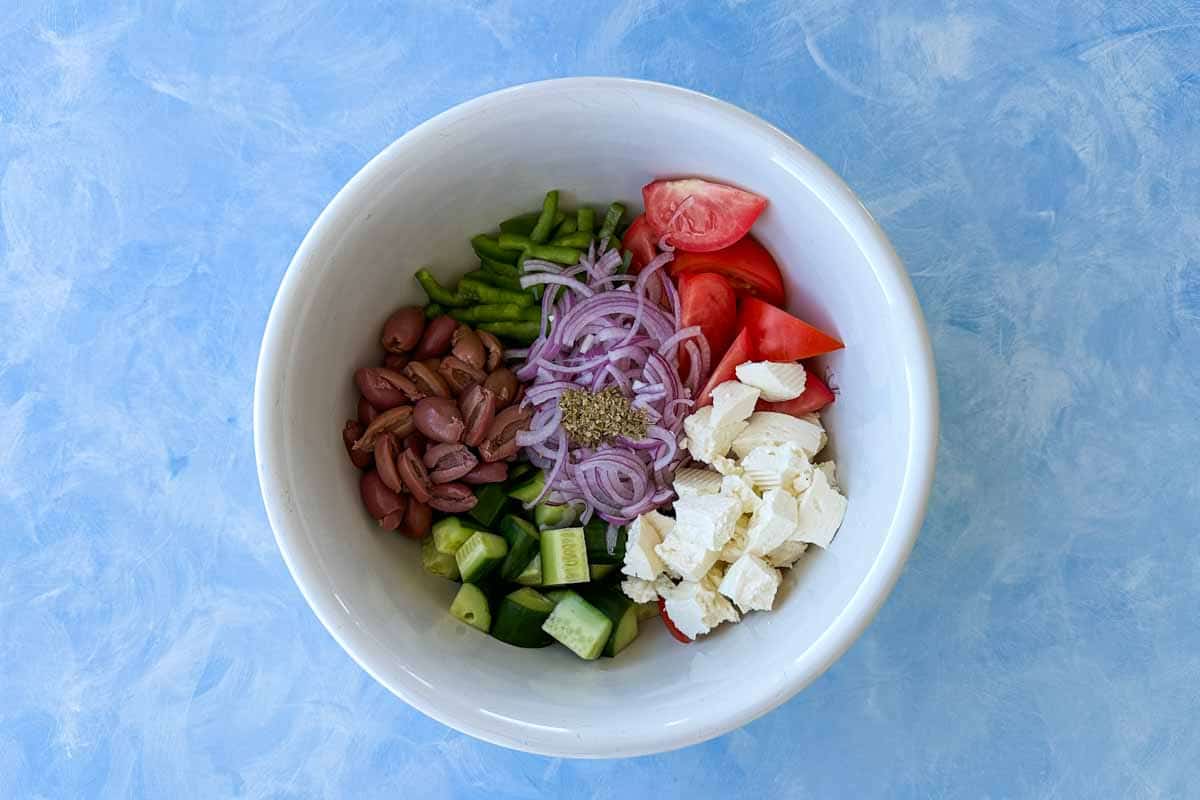
- Add the kalamata olives and sprinkle over the oregano.
- Break the feta into large pieces and scatter over the vegetables.
Chef's Tip: Breaking the feta into larger chunks keeps the salad looking rustic and prevents the cheese from dissolving into the dressing.
Dress the salad
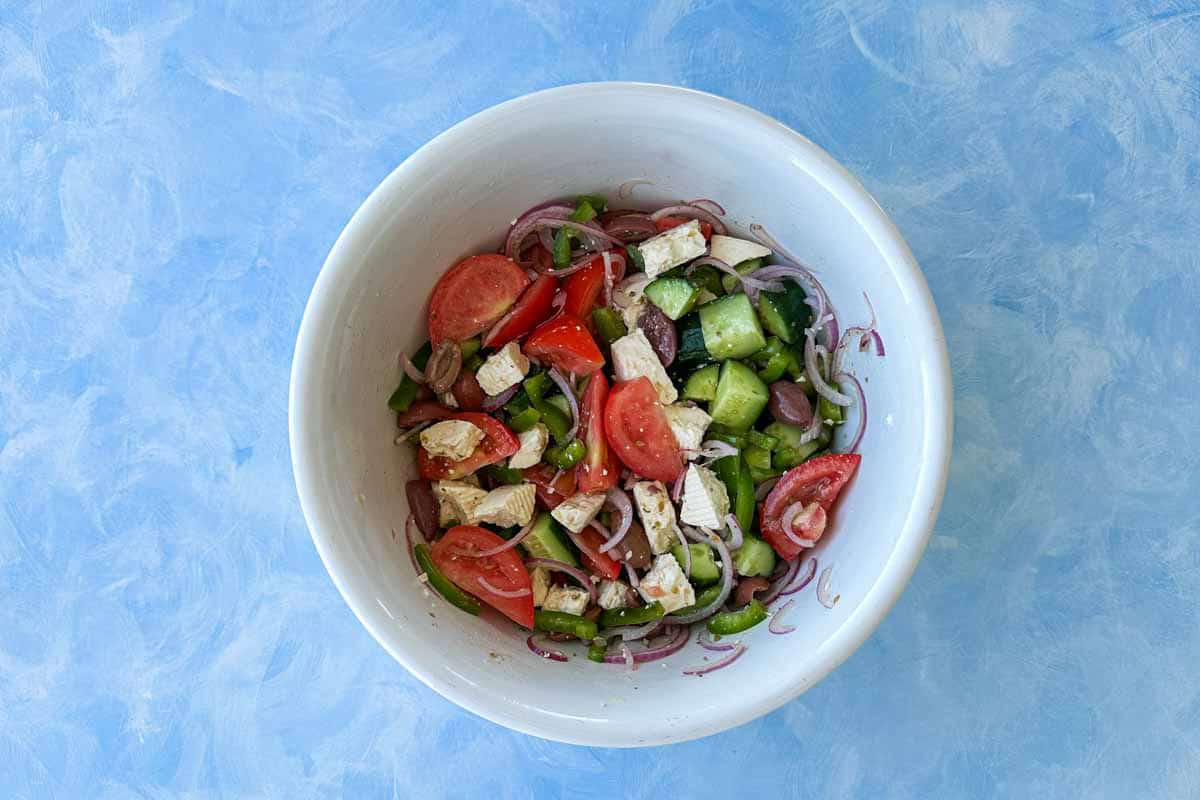
- Drizzle with enough Homemade Greek Salad Dressing to lightly coat the salad. Toss gently until everything is evenly coated. (For a more authentic Greek salad drizzle with olive oil and a little red wine vinegar instead of the dressing)
Serve
- Transfer the salad to a serving platter or bowl. Serve immediately with a little extra dressing on the side if desired.
Flavor Variations, Substitutions and Add-Ins
This Greek salad is very adaptable and easy to customize depending on what you have on hand.
- Include grilled chicken - For a more filling meal
- Add chickpeas - A great vegetarian protein boost
- Mix in orzo or pasta - Turns it into a heartier salad
- Try add in pita chips - For extra crunch
- Put in avocado - Adds creaminess (not traditional but delicious)
- Add lettuce - A modern variation if you prefer a lighter base
What to Serve with Greek Salad
This traditional Greek salad pairs beautifully with grilled meats, roast dishes, and Mediterranean-style meals
- As part of a Greek feast - Serve alongside chicken or pork souvlaki, lamb gyros, or try our Falafel Gyros and Lamb Koftas. Add homemade Tzatziki, hummus and warm Pita Bread for a full mezze-style spread with olives, dips, and fresh salads.
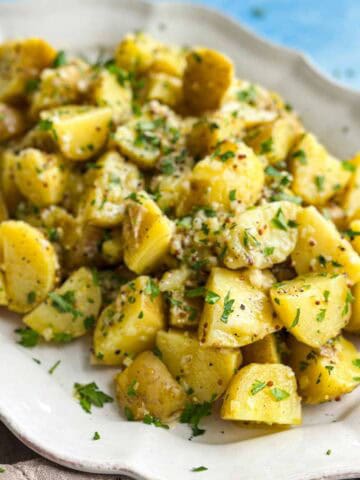
- Roast chicken and lamb dishes - Serve alongside Mediterranean Boneless Lamb Roast or Roasted Lemon and Herb Chicken and serve with our Greek lemon potatoes.
- Seafood dishes - Pairs well with baked fish like our Greek baked cod or grilled seafood.
- Summer salads and BBQ sides - Serve with our Caprese salad, watermelon salad with feta, vegetarian Italian pasta salad, or cucumber feta salad for a fresh summer table.

Best Wine Pairings
This fresh Greek salad pairs beautifully with crisp, refreshing wines that complement its bright flavors.
- Sauvignon Blanc - Fresh acidity and citrus notes balance the vegetables and feta
- Pinot Grigio - Light and easy-drinking, perfect for warm weather
- Dry Rosé - A versatile option for Mediterranean meals
- Assyrtiko - A classic Greek white wine with minerality and brightness
Storage Instructions
- Fridge: This salad is best enjoyed fresh. Once dressed, it will keep for about 1 day in an airtight container in the refrigerator.
- Make Ahead: You can prepare the vegetables ahead of time and store them separately. Add the feta and dressing just before serving for the best texture.
FAQ's
A : Authentic Greek salad includes tomatoes, cucumber, green bell pepper, red onion, and olives
A : Traditionally, it is dressed simply with extra virgin olive oil, a little red wine vinegar, salt and dried Greek oregano.
More Salad Recipes
If you enjoy fresh Mediterranean salads like this one, you may also like:
- Cucumber and Feta Salad
- Mediterranean Bulgur Salad
- Watermelon Salad with Feta
- Vegetarian Italian Pasta Salad
- Caprese Salad
This traditional Greek salad is everything we love about Mediterranean cooking - simple ingredients, bold flavors, and effortless preparation. It's fresh, vibrant, and perfect for everything from casual meals to summer entertaining.
Give it a try and let us know in the comments how it turned out! Don't forget to Pin it for later or share it with a friend.
Print
Traditional Greek Salad
- Total Time: 15 minutes
- Yield: Serves 4-6
- Diet: Vegetarian
Description
This traditional Greek salad, also known as Horiatiki, is a fresh Mediterranean side dish made with ripe tomatoes, crisp cucumber, olives, and creamy feta. Dressed simply with olive oil and a touch of red wine vinegar, it's light, vibrant, and ready in just 15 minutes.
Ingredients
1 large English cucumber (about 350 g / 12 oz), cut into quarters lengthwise and sliced into 1.5 cm (½ inch) chunks (or 2 small Persian cucumbers)
1 green bell pepper, cored and thinly sliced
450 g (1 lb) ripe tomatoes, cut into large wedges or chunks
200 g (7-8 oz) feta cheese, broken into large pieces
1 small red onion, thinly sliced
1 cup pitted kalamata olives
¼ teaspoon dried Greek oregano (or 1 teaspoon fresh oregano leaves)
For serving:
Instructions
Place the cucumber, bell pepper, tomatoes, and red onion in a large mixing bowl.
Chef's Tip: Cut the vegetables into fairly large pieces so the salad stays crisp and rustic rather than finely chopped.
Add the kalamata olives and sprinkle over the oregano.
Break the feta into large pieces and scatter over the vegetables.
Chef's Tip: Breaking the feta into larger chunks keeps the salad looking rustic and prevents the cheese from dissolving into the dressing.
Drizzle with enough Homemade Greek Salad Dressing to lightly coat the salad. Toss gently until everything is evenly coated.
(For a more authentic Greek salad drizzle with olive oil and a little red wine vinegar instead of the dressing)
Transfer the salad to a serving platter or bowl. Serve immediately with a little extra dressing on the side if desired.
Notes
Storage Instructions
Fridge: This salad is best enjoyed fresh. Once dressed, it will keep for up to 1 day in an airtight container.
Make Ahead: Prepare the vegetables ahead of time and store separately. Toss with dressing just before serving.
Freezer: Not freezer friendly.
- Prep Time: 15 minutes
- Cook Time: 0 minutes
- Category: Salad
- Method: No-cook
- Cuisine: Greek
Nutrition
- Serving Size: 1 serving
- Calories: 145
- Sugar: 5.3 g
- Sodium: 476.3 mg
- Fat: 9.7 g
- Carbohydrates: 9.8 g
- Protein: 6.3 g
- Cholesterol: 29.7 mg
The nutrition is an estimate only. It was calculated using Nutrifox, an online nutrition calculator.



Leave a Reply