
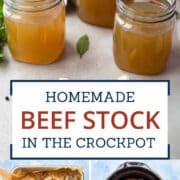
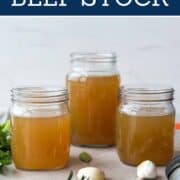
This beef stock in a slow cooker recipe is made by roasting beef bones until deeply browned, then slowly cooking them with mirepoix, herbs, peppercorns, and cold water until the stock is rich and savory.
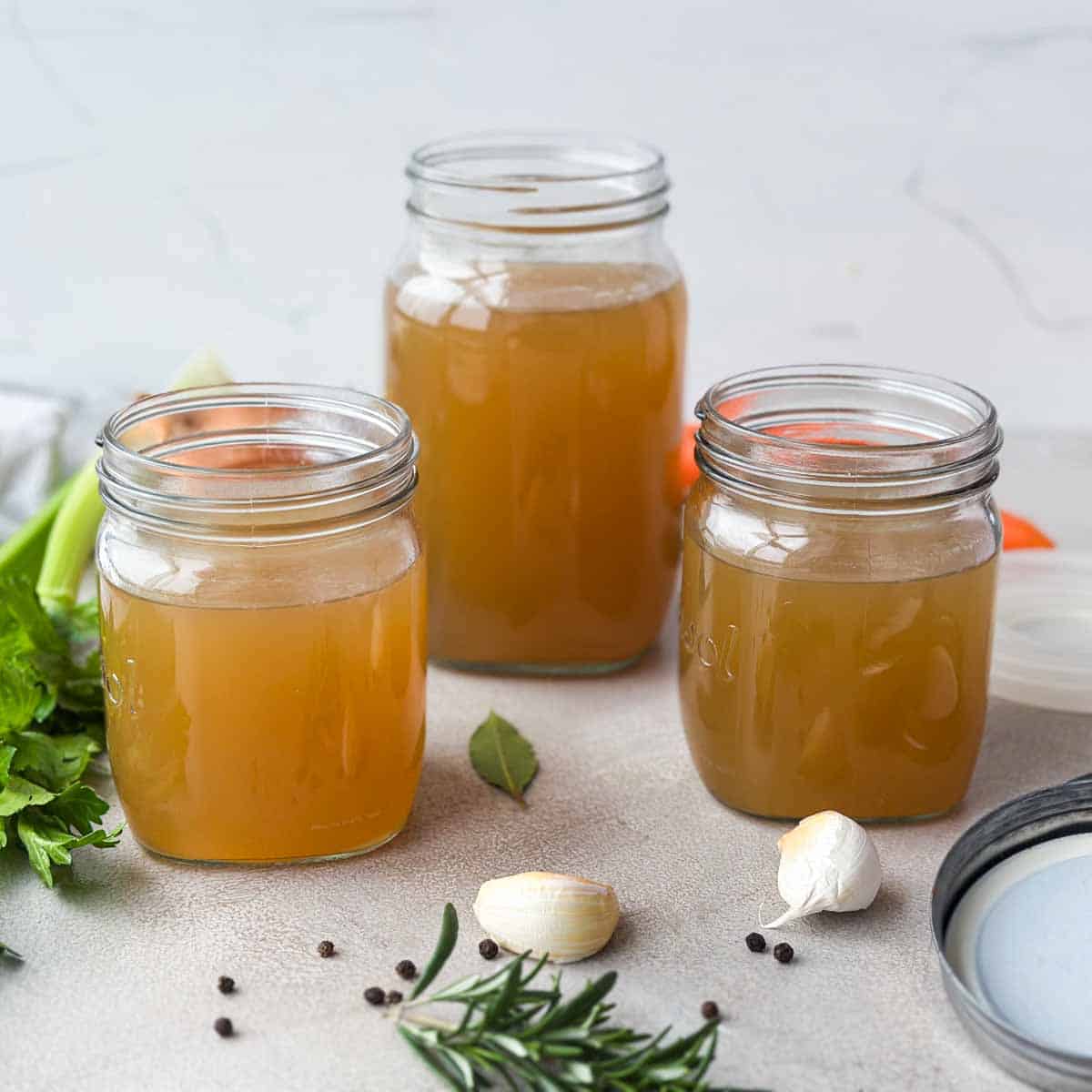
Using a slow cooker isn't the classical French method for making beef stock, but it is the method Grant and I use most often at home. It requires very little hands-on attention and means we can have homemade stock quietly cooking away without keeping a stockpot on the stove all day.
And yes, I know a few of the chefs I worked with would probably hit me over the head with a wooden spoon if they saw me making stock this way! 😀
But homemade stock is one of those kitchen staples where, for us, making it regularly is more important than making it exactly as we did in a professional kitchen.
Scroll down for step-by-step instructions, chef's tips, the difference between beef stock and broth, storage and freezing instructions, and plenty of ideas for using homemade beef stock.
Jump to:
- Recipe at a Glance
- What Is Beef Stock?
- Beef Stock vs Beef Broth: What's the Difference?
- Why Make Beef Stock in a Slow Cooker?
- Ingredients You'll Need
- How to Make Beef Stock in a Slow Cooker
- Substitutions and Flavor Variations
- Ways to Use Homemade Beef Stock
- How to Store Homemade Beef Stock
- FAQ's
- More Kitchen Basics
- Slow Cooker Beef Stock Recipe
Recipe at a Glance
- Ready in: About 8½-10½ hours
- Makes: About 2.5-3 litres (10-12 cups)
- Main ingredients: Beef bones, mirepoix, garlic, herbs, peppercorns, and apple cider vinegar
- Dietary information: Gluten-free and dairy-free
- Perfect for: Soups, stews, sauces, braises, and freezer meal prep
- Cooking method: Roasted, then slow cooked
The tested recipe uses 2-2.5 kg (4½-5½ lb.) beef bones and produces approximately 2.5-3 liters (10-12 cups) of stock.
What Is Beef Stock?
Beef stock is a savory cooking liquid traditionally made by gently simmering beef bones with vegetables and aromatics in water for several hours.
It's a staple in classical French cooking and forms the base of soups, stews, sauces, gravies, and braised dishes. In culinary school, stock-making was one of the first techniques we learned, and in most professional kitchens I worked in, there was almost always a pot quietly simmering away.
What Is Brown Beef Stock?
This recipe is a brown beef stock because the bones are roasted first, giving the stock a deeper color and richer flavor.
A white stock is made without roasting the bones and has a lighter, more delicate flavor.
Mirepoix
Traditional stock usually includes mirepoix, a combination of onion, carrot, and celery used to build flavor.
You can read more about it in our guide to French Mirepoix.
Bouquet Garni and Aromatics
Herbs and aromatics add subtle flavor. We use rosemary, thyme, parsley, bay leaves, and black peppercorns.
Traditionally, herbs may be tied into a bouquet garni, but because we strain the stock at the end, we simply add them straight to the slow cooker.
Beef Stock vs Beef Broth: What's the Difference?
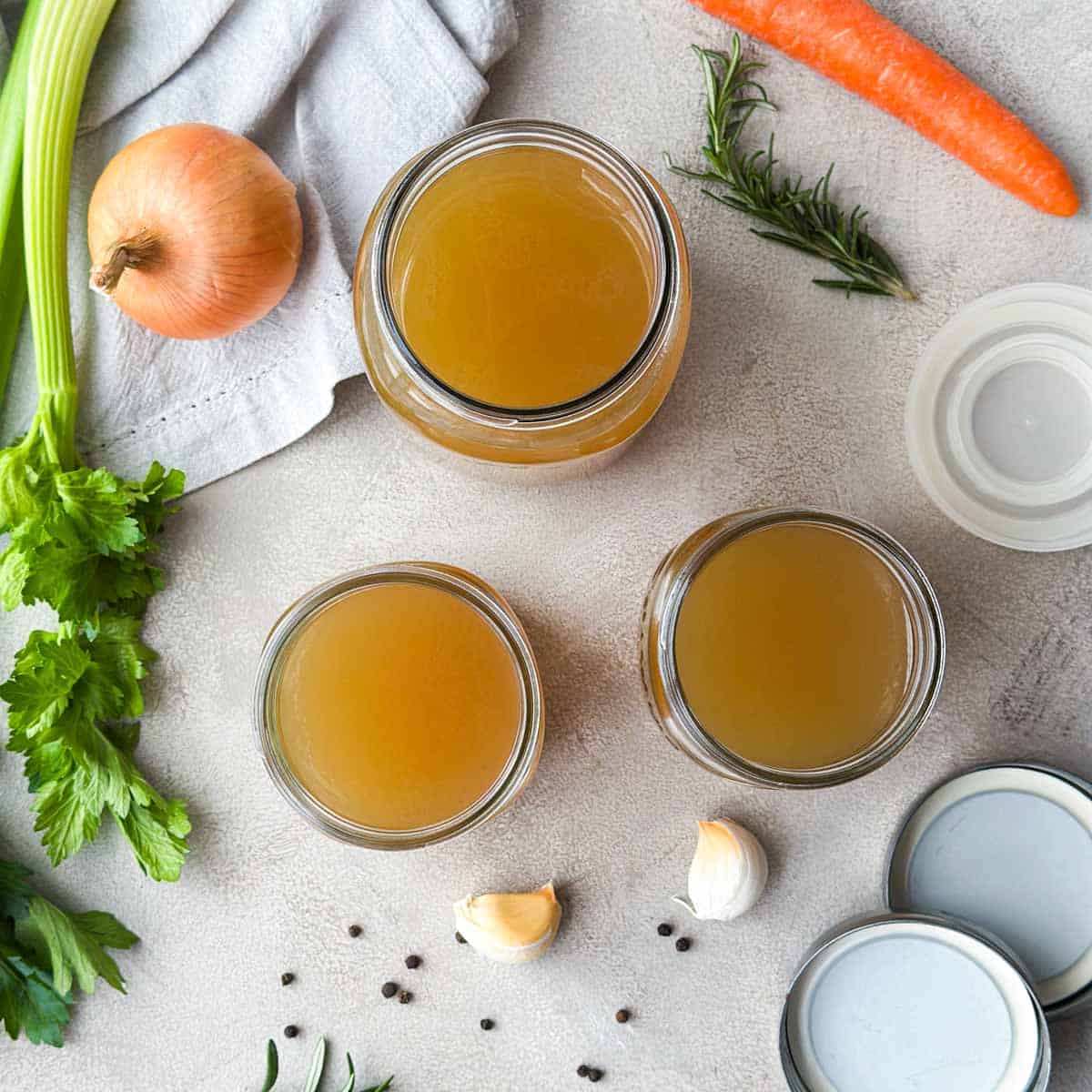
Beef stock is traditionally made primarily from bones, while beef broth is usually made with meat and is more heavily seasoned.
Stock is generally intended as an ingredient rather than something served on its own, so it is usually kept fairly neutral and isn't heavily salted.
Bones also contribute gelatin to stock, which gives a well-made stock more body and can cause it to become jelly-like once refrigerated.
Broth tends to be lighter and is often seasoned enough to enjoy as it is.
You'll sometimes see the terms beef stock, beef broth, and beef bone broth used interchangeably today, but technically they aren't quite the same thing.
Why Make Beef Stock in a Slow Cooker?
Traditionally, I'd make stock in a large stockpot where you can closely control the simmer, skim impurities from the surface, and allow some evaporation and concentration as it cooks.
A slow cooker behaves differently. It is covered, so very little liquid evaporates, and you don't have quite the same level of control over the simmer.
But for home cooking, the slow cooker is wonderfully practical.
Once everything is inside, you can leave it gently cooking for hours without watching a pot on the stove, and that means we're much more likely to actually make homemade stock-which, in our kitchen, is a pretty good compromise between classical technique and everyday practicality.
Ingredients You'll Need
This slow cooker beef stock uses classic stock ingredients with one small addition of our own.

- Beef bones - Ask your butcher to cut them into approximately 5 cm (2-inch) pieces. Smaller pieces expose more surface area and fit more easily into the slow cooker.
- Olive oil - Just enough to lightly coat the bones before roasting.
- Mirepoix - Onion, carrots, and celery create the savory vegetable base.
- Garlic - Garlic isn't traditionally added to a classical stock because the goal is usually to keep the flavor fairly neutral. We enjoy the extra savory flavor it gives ours, so we add it-but you can absolutely leave it out.
- Black peppercorns - Add gentle peppery warmth without making the stock heavily seasoned.
- Fresh herbs - Rosemary, thyme, and parsley give subtle aromatic flavor.
- Bay leaves - One of our favorite background aromatics for stocks, soups, and stews. You can read more in our Guide to Bay Leaves.
- Apple cider vinegar - A small amount is added along with the other ingredients.
- Cold water - Always start your stock with cold water and add only enough to cover the bones.
See the recipe card for quantities.
How to Make Beef Stock in a Slow Cooker
Roast the bones
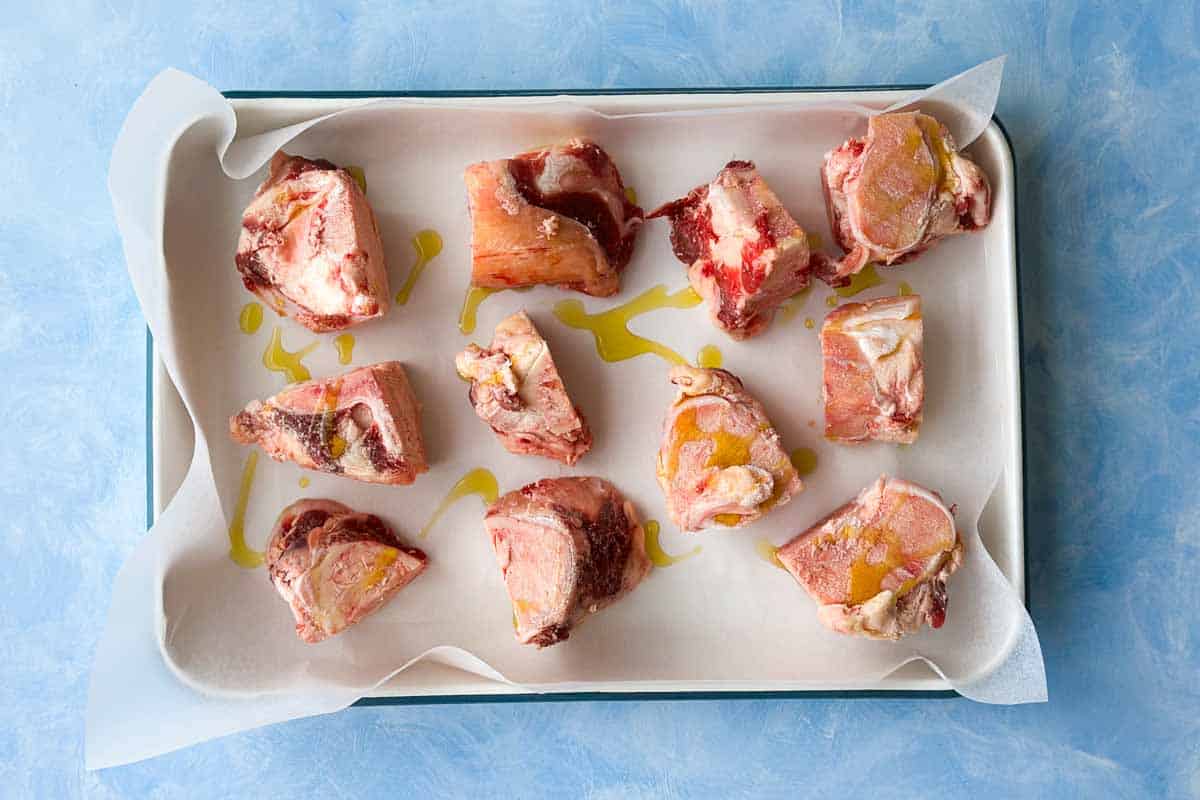

Preheat the oven to 220°C (425°F).
Arrange the beef bones in a single layer on a large roasting tray. Drizzle lightly with olive oil and roast for 30-40 minutes, turning halfway through, until deeply browned.
Roasting is what gives this brown beef stock its rich color and deeper savory flavor.
Chef's Tip: Give the bones enough room to roast rather than crowding them. We're looking for good browning rather than steaming.
Drain the excess fat
Carefully transfer the roasted bones to your slow cooker using tongs. Spoon off and discard any excess fat from the roasting tray.
Add aromatics
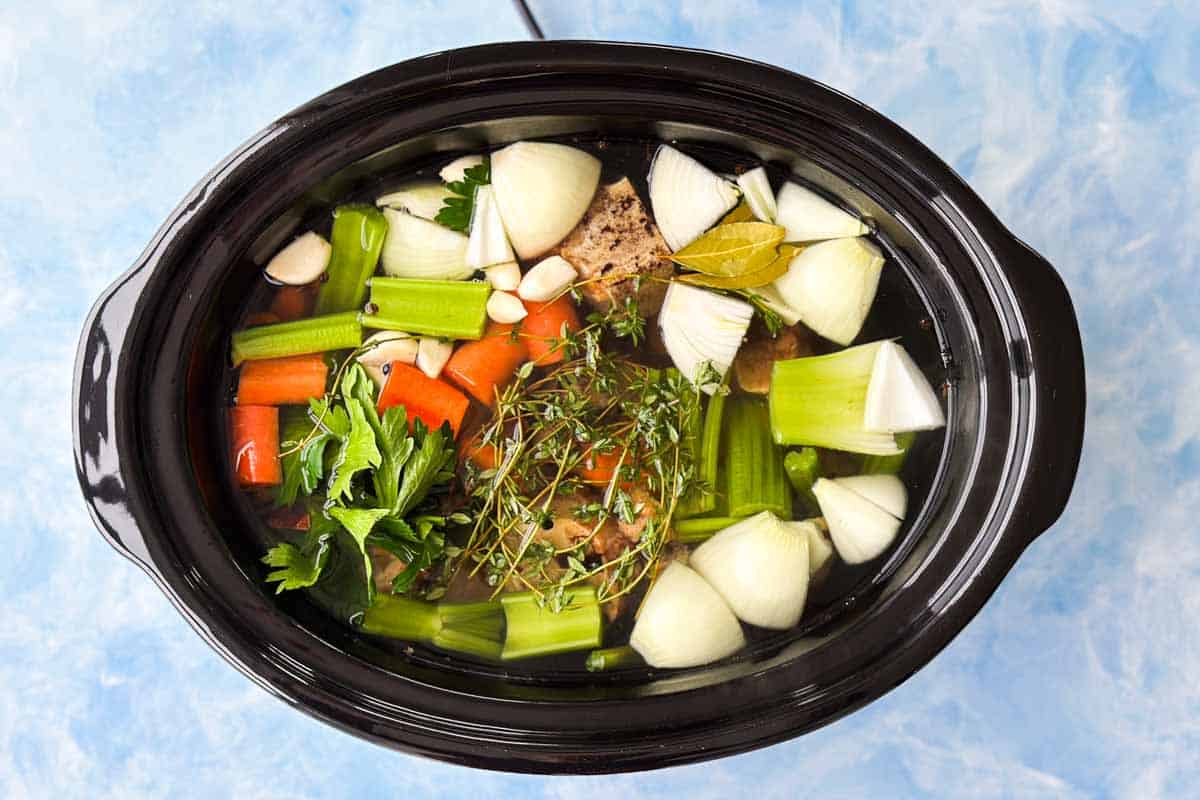
Add the carrots, celery, onion, optional garlic, peppercorns, rosemary, thyme, parsley, bay leaves, and apple cider vinegar.
Pour in enough cold water to just cover the bones, approximately 3-4 litres (12-16 cups), depending on the size and shape of your slow cooker.
Chef's Tip: More water doesn't necessarily make more stock-it can simply dilute the flavor. Add only enough to cover the bones.
Slow cook
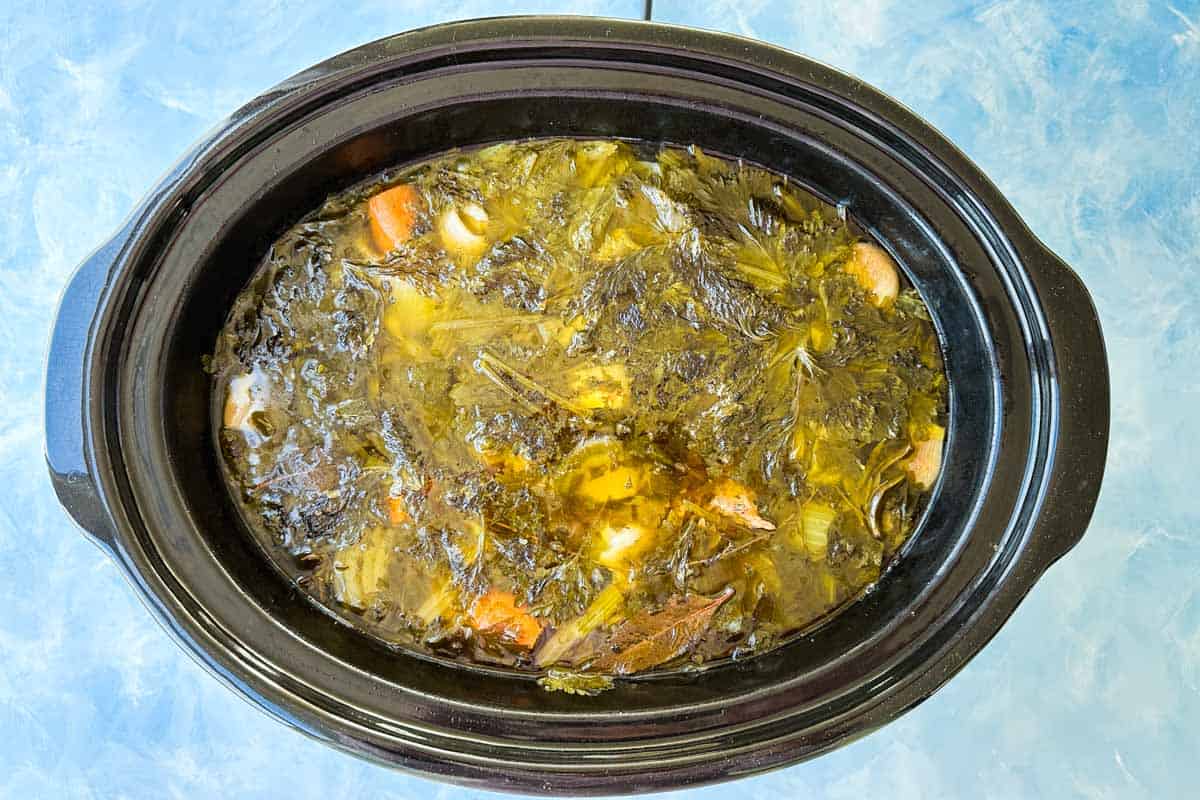
Cover and set the slow cooker to HIGH.
Once the liquid begins gently bubbling around the edges, after approximately 1 hour, reduce the slow cooker to LOW and cook for another 6-8 hours.
The tested recipe cooks gently rather than at a rolling boil to help keep the finished stock cleaner tasting and clearer.
Chef's Tip: Stock should cook gently. Vigorous boiling agitates the fat and impurities through the liquid and can give you a cloudier stock.
Strain the stock
Place a fine-mesh sieve over a large stockpot or heatproof container.
Carefully strain the stock and discard the bones, vegetables, and herbs.
For an even clearer stock, line your sieve with cheesecloth before straining.
Chef's Tip: Don't press or mash the vegetables through the sieve. Let the stock drain naturally for a cleaner finished stock.
Cool the stock quickly.
Place the pot of strained stock into a sink filled with cold water and ice.
Stir occasionally to help the liquid cool evenly, changing the cold water as needed.
Once cooled, transfer the stock to clean containers.
Store or freeze
Refrigerate the stock for up to 3 days or freeze for up to 3 months, following the storage instructions from our tested recipe.
We usually freeze ours in 1-cup portions so it's easy to grab exactly what we need for sauces, soups, stews, and braises.
Substitutions and Flavor Variations
Because stock is generally used as an ingredient in other recipes, I prefer keeping the flavors fairly neutral.
- Leave out the garlic - For a more classical, neutral beef stock.
- Make a lighter stock - Skip roasting the bones for a paler, more delicately flavored stock.
Ways to Use Homemade Beef Stock
Homemade beef stock is one of those ingredients that's incredibly useful to keep in the freezer. Use it wherever you want to add savory depth without relying on plain water or stock cubes.
- Soups - Use it for French onion soup, beef and vegetable soup, mushroom soup, or lentil soup.
- Stews and braises - Add it to Beef Bourguignon, slow cooker beef stew, pot roast, short ribs, or other slow-cooked meat dishes.
- Pasta sauces - Add a splash to our Italian Meat Sauce or other long-simmered ragùs.
- Gravies and pan sauces - Use it to deglaze roasting pans or build rich sauces for steak and roast beef.
- Risotto and grains - Substitute beef stock for water when you want a deeper savory flavor.
- Casseroles and pies - Use it as the liquid base in cottage pie, beef pot pie, or other hearty casseroles.
For a lighter all-purpose option, you can also make our Homemade Vegetable Stock.
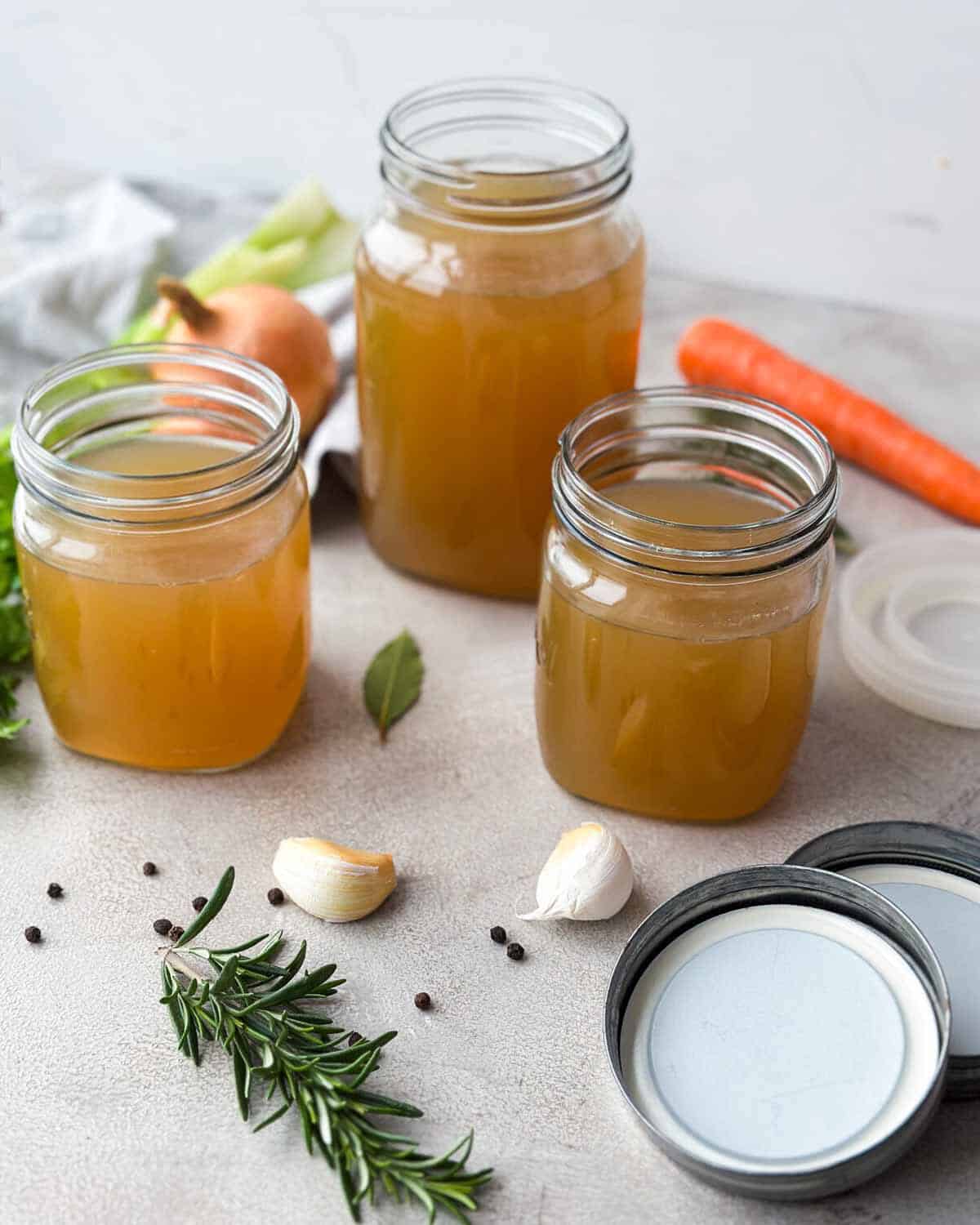
How to Store Homemade Beef Stock
Fridge: Cool completely, transfer to airtight containers, and refrigerate for up to 3 days.
Make ahead: Beef stock is a great make-ahead kitchen staple. Make a batch when you have time and portion it according to the recipes you cook most often.
Freezer: Freeze for up to 3 months. We particularly like freezing stock in 1-cup portions, which makes it easy to defrost only what we need.
Once refrigerated, a layer of fat may firm up on top of the stock. You can remove this before using the stock if desired.
FAQ's
A : Allow approximately 8-10 hours in total. We start the slow cooker on HIGH for about an hour until the liquid begins gently bubbling around the edges, then reduce it to LOW and continue cooking for 6-8 hours.
A : Not always, but roasting the bones gives you a darker brown beef stock with much deeper roasted flavor.
For this recipe, roast the bones at 220°C (425°F) for 30-40 minutes before transferring them to the slow cooker.
A : That can happen when gelatin extracted from the bones sets as the stock cools and is generally a sign of a good stock. Once reheated, it liquefies again.
And if yours doesn't turn to jelly, that doesn't necessarily mean you've done anything wrong-the final consistency depends heavily on the types and proportions of bones used and the amount of water.
A : We don't add salt to this recipe.
Stock is usually used as an ingredient in another dish, so keeping it unsalted gives you much more control over the seasoning of the finished recipe.
More Kitchen Basics
Building a good collection of homemade basics makes everyday cooking so much easier. Try our:
There is something wonderfully satisfying about having containers of homemade beef stock tucked away in the freezer. It takes a little time, but very little of that time requires you to actually do anything.
And while my culinary-school instructors may not approve of the slow cooker method, it's the method that means we actually make stock regularly at home-which counts for quite a lot in my book. 😀
Use it in soups, stews, braises, sauces, and all those cozy recipes that taste just that little bit better when you start with homemade stock.
Give it a try and let us know in the comments how it turned out. Don't forget to Pin it for later or share it with a friend.
Print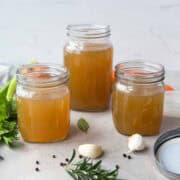
Slow Cooker Beef Stock Recipe
- Total Time: 8½-10½ hours
- Yield: About 2.5-3 liters (10-12 cups) 1x
- Diet: Gluten Free
Description
This beef stock in a slow cooker recipe is made by roasting beef bones until deeply browned, then slowly cooking them with mirepoix, herbs, peppercorns, and cold water until the stock is rich and savory
Ingredients
2-2.5 kg (4 ½-5 ½ lb) beef bones, ask your butcher to cut bones into 5 cm / 2 inch pieces
1 tablespoon olive oil
2 large carrots, cut into large chunks
2 celery stalks, cut into 3-4 chunks
1 large onion, quartered
6 garlic cloves, smashed
10 whole black peppercorns
3-4 sprigs each of rosemary, thyme, and parsley
2 bay leaves
3 tablespoon apple cider vinegar
3-4 litres (12-16 cups) cold water
Instructions
Preheat the oven to 220°C (425°F).
Arrange the beef bones in a single layer on a large roasting tray. Drizzle lightly with olive oil and roast for 30-40 minutes, turning halfway through, until deeply browned.
Roasting is what gives this brown beef stock its rich color and deeper savory flavor.
Chef's Tip: Give the bones enough room to roast rather than crowding them. We're looking for good browning rather than steaming.
Carefully transfer the roasted bones to your slow cooker using tongs.
Spoon off and discard any excess fat from the roasting tray.
Add the carrots, celery, onion, optional garlic, peppercorns, rosemary, thyme, parsley, bay leaves, and apple cider vinegar.
Pour in enough cold water to just cover the bones, approximately 3-4 litres (12-16 cups), depending on the size and shape of your slow cooker.
Chef's Tip: More water doesn't necessarily make more stock-it can simply dilute the flavor. Add only enough to cover the bones.
Cover and set the slow cooker to HIGH.
Once the liquid begins gently bubbling around the edges, after approximately 1 hour, reduce the slow cooker to LOW and cook for another 6-8 hours.
The tested recipe cooks gently rather than at a rolling boil to help keep the finished stock cleaner tasting and clearer.
Chef's Tip: Stock should cook gently. Vigorous boiling agitates the fat and impurities through the liquid and can give you a cloudier stock.
Place a fine-mesh sieve over a large stockpot or heatproof container.
Carefully strain the stock and discard the bones, vegetables, and herbs.
For an even clearer stock, line your sieve with cheesecloth before straining.
Chef's Tip: Don't press or mash the vegetables through the sieve. Let the stock drain naturally for a cleaner finished stock.
Place the pot of strained stock into a sink filled with cold water and ice.
Stir occasionally to help the liquid cool evenly, changing the cold water as needed.
Once cooled, transfer the stock to clean containers.
Refrigerate the stock for up to 3 days or freeze for up to 3 months, following the storage instructions from our tested recipe.
We usually freeze ours in 1-cup portions so it's easy to grab exactly what we need for sauces, soups, stews, and braises.
Notes
Garlic: Garlic isn't traditionally added to classical stock because stock is generally kept neutral. We enjoy the extra flavor, but it can be omitted.
Water: Add only enough cold water to cover the bones. The exact quantity will depend on your slow cooker.
Storage: Refrigerate in an airtight container for up to 3 days.
Freezing: Freeze for up to 3 months. We like freezing stock in 1-cup portions.
Fat: Once chilled, the fat will rise and firm on the surface. Remove it before using the stock if desired.
- Prep Time: 20 minutes
- Roasting Time: 30-40 minutes
- Cook Time: 7-9 hours
- Category: Kitchen Basics
- Method: Slow Cooker
- Cuisine: French
Nutrition
- Serving Size: 1 cup serving
- Calories: 52
- Sugar: 2.2 g
- Sodium: 358.2 mg
- Fat: 1.5 g
- Carbohydrates: 6.5 g
- Protein: 3.9 g
- Cholesterol: 0 mg
The nutrition is an estimate only. It was calculated using Nutrifox, an online nutrition calculator.




Leave a Reply