

Learn how to toast pine nuts on the stove or in the oven until golden, fragrant, and buttery. They're perfect for adding rich, nutty flavor to basil pesto, salads, pasta, dips, roasted vegetables, and Mediterranean-style dishes.
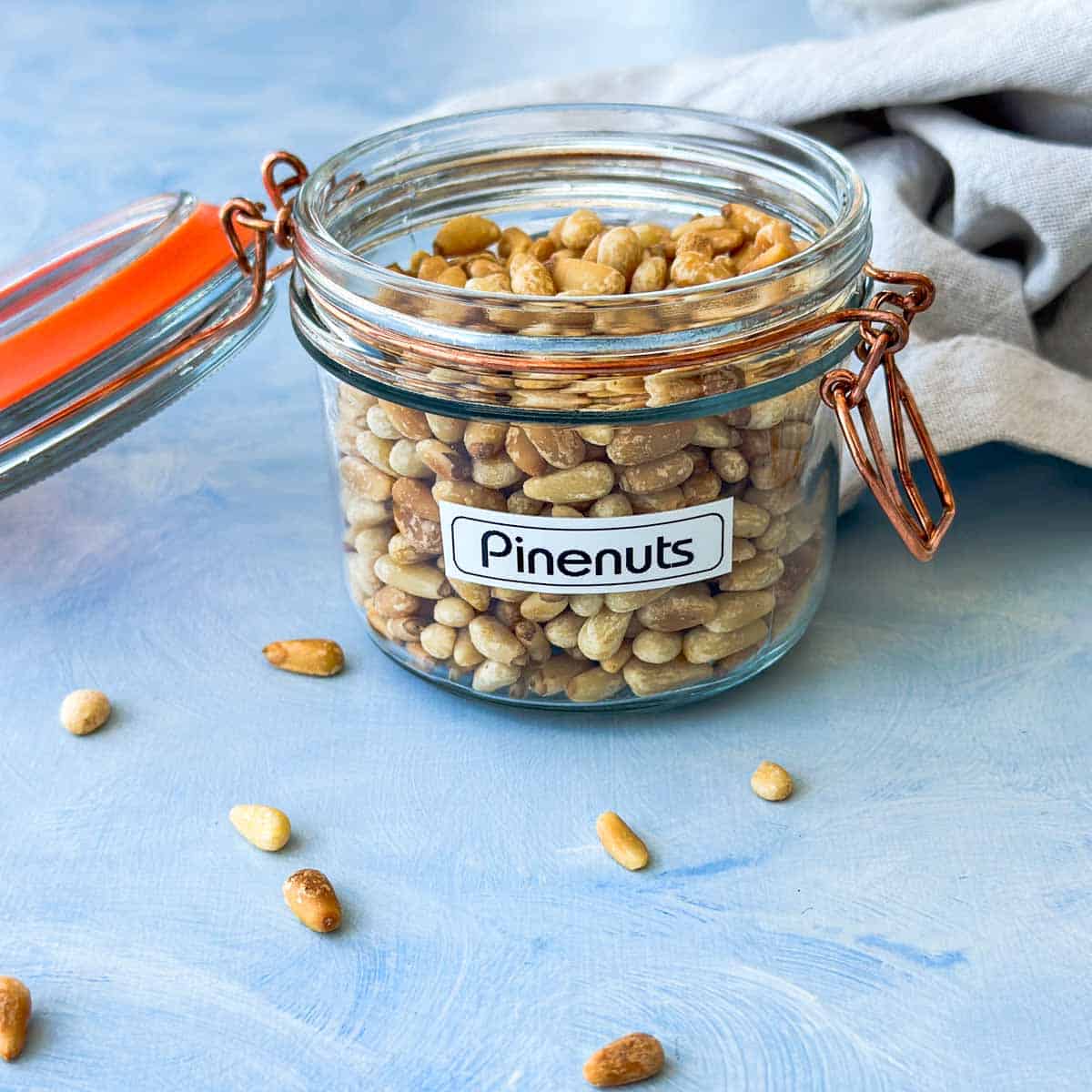
Toasted pine nuts are one of those small ingredients that can completely change a dish. They're delicate, buttery, and slightly sweet, and once toasted, their flavor becomes richer and nuttier.
We use pine nuts most often in our homemade basil pesto recipe, but they're also lovely sprinkled over salads, roasted vegetables, creamy pasta, hummus, or Middle Eastern-style meat dishes.
The only thing to remember? Pine nuts toast quickly and burn even faster. Whether you're using a skillet or the oven, keep a close eye on them and remove them from the heat as soon as they turn lightly golden. Another pro tip: transfer them immediately to a plate in a single layer to cool. The residual heat from the pan or baking sheet will keep them toasting, and they can quickly go from golden to burnt.
Scroll down for step-by-step instructions, chef's tips, storage advice, and easy pine nut substitutions.
Jump to:
Why You'll Love This Kitchen Basic
- Big flavor from one ingredient - Toasting brings out their naturally buttery, nutty flavor.
- Two simple methods - Use the stovetop for small batches or the oven for larger amounts.
- Perfect for Mediterranean cooking - Sprinkle them over pesto, dips, salads, pasta, vegetables, and more.
Ingredient Spotlight: Pine Nuts
Pine nuts are the edible seeds found inside the cones of certain pine trees. They're often used in Italian and Mediterranean cooking, especially in pesto, where they add richness, nuttiness, and a creamy texture.
They're also known as pignoli, especially in Italian cooking. You may see them used in sweet recipes like pignoli cookies, as well as savory dishes like salads, pasta, dips, and roasted vegetables.
Pine nuts have a soft, buttery texture with a mild, slightly sweet flavor. Toasting them brings out more depth and gives them a delicate crunch.
They are also one of the more expensive nuts because they are slow and labor-intensive to harvest. Pine cones need time to mature, and the small seeds are often removed by hand, which is part of what makes pine nuts such a special ingredient.Want to learn more? Read this complete guide to pine nuts from MasterClass.
Ingredients You'll Need
You only need one ingredient for this simple kitchen technique.
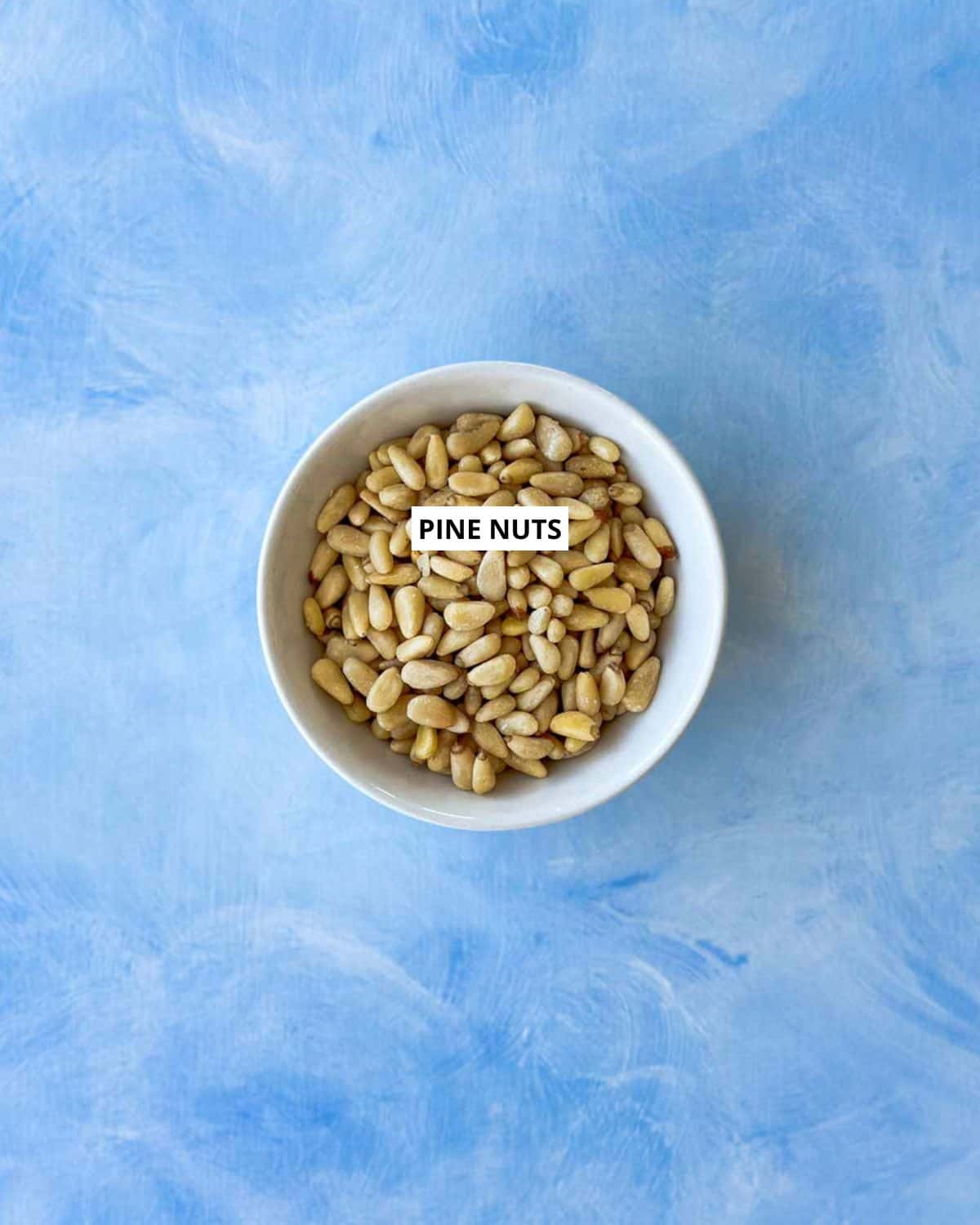
- Pine nuts - Also called pignoli or pinoli, pine nuts are small, pale, buttery seeds harvested from certain varieties of pine trees. Use fresh pine nuts that smell sweet and nutty, never bitter or rancid.
See the recipe card for quantities.
Seasonality: When Are Pine Nuts in Season?
Pine nuts are harvested from late summer through fall, depending on the region and variety of pine tree.
Because pine nuts are dried and sold shelled, they're available in grocery stores year-round. However, they are naturally high in oil, which means they can become rancid more quickly than some other nuts and seeds.
For the freshest flavor, store raw pine nuts in the fridge or freezer and always smell or taste them before using. If they taste bitter or sharp, it's best to replace them.Want to learn more about pine nuts and their harvest season? Explore FoodPrint's Real Food Encyclopedia guide to pine nuts.
How to Toast Pine Nuts
There are two easy ways to toast pine nuts: in a skillet on the stovetop or in the oven.
The stovetop method is faster and best for small batches, while the oven method is helpful if you want to toast a larger amount more evenly.
How to Toast Pine Nuts in a Skillet
This is the quickest method and the one we use most often when we only need a small handful of toasted pine nuts.
Add the pine nuts to a dry pan
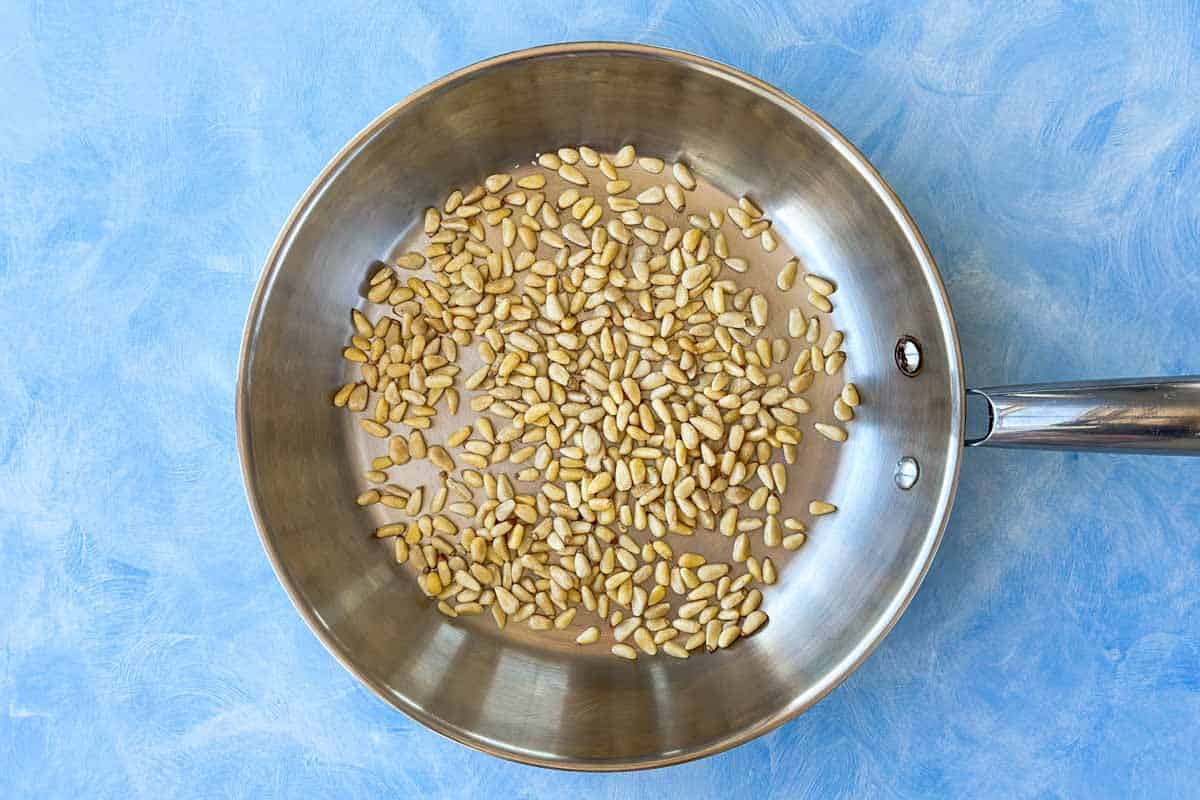
- Place the pine nuts in a dry skillet over medium heat. Don't add oil or butter - pine nuts already contain natural oils.
Toast until golden and fragrant
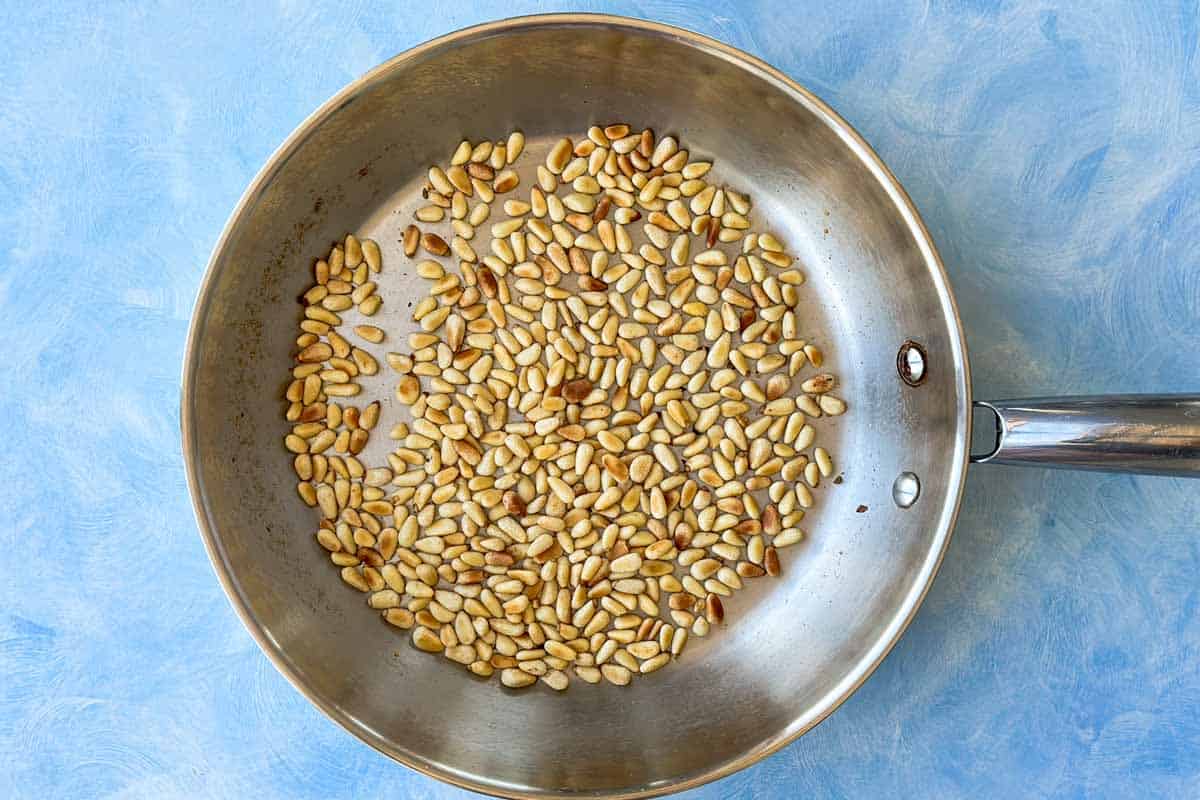
- Cook for 2-4 minutes, stirring or shaking the pan often, until the pine nuts are lightly golden and smell warm and nutty.
Chef's Tip: Pine nuts can go from perfectly toasted to burnt very quickly. Keep them moving in the pan and don't walk away.
Transfer to a plate to cool
- As soon as they're golden, transfer the pine nuts to a plate. Don't leave them in the hot pan, as they will continue to cook and may burn.
How to Toast Pine Nuts in the Oven
The oven method is a good choice when you want to toast a larger batch or prefer a more hands-off method.
Preheat the oven
- Preheat the oven to 350°F (180°C).
Spread the pine nuts on a baking sheet

- Place the pine nuts in a single layer on a small baking sheet. Try not to overcrowd them so they toast evenly.
Toast until lightly golden

- Bake for 5-6 minutes, stirring once halfway through, until the pine nuts are lightly golden and fragrant.
Chef's Tip: Check them often during the last minute of baking. Pine nuts are small and delicate, so they can brown quickly.
Cool completely
- Transfer the toasted pine nuts to a plate and let them cool completely before using or storing.
Best Substitutions for Pine Nuts
Pine nuts are delicious, but they can be expensive and aren't always easy to find. These are some of the best substitutes to use in pesto, salads, dips, and Mediterranean-style dishes.
- Cashews - Mild, creamy, and slightly sweet. Cashews are a great substitute for pine nuts in pesto and creamy sauces.
- Pistachios - Nutty, gently sweet, and beautiful in green sauces, salads, and dips.
- Almonds - Easy to find and versatile. Use blanched almonds for a milder flavor or toasted almonds for extra crunch.
- Walnuts - Earthier and slightly more robust, but they work well in pesto-style sauces and pasta dishes.
- Sunflower seeds - A good nut-free option for salads, dips, and some pesto-style recipes.
Chef's Tip: If you're substituting pine nuts in pesto, choose a nut or seed with a mild flavor so it doesn't overpower the basil, garlic, and olive oil.
Ways to Use Toasted Pine Nuts
Toasted pine nuts are a lovely finishing touch for both sweet and savory dishes. A small sprinkle adds crunch, richness, and a subtle buttery flavor.
- Pesto and sauces - Use toasted pine nuts in homemade basil pesto for a classic Italian flavor. They add body, richness, and a soft nutty taste.
- Dips and mezze - Sprinkle toasted pine nuts over homemade hummus,roasted beet hummus, or Lebanese moussaka for extra texture.
- Salads and vegetables - Add them to arugula salad, pasta salads, roasted Mediterranean vegetables, tomato caprese salad, or watermelon salad with feta cheese.
- Meat dishes - Use them as a garnish for our Middle Eastern ground beef kebabs or baked caprese chicken.
- Pasta and risotto - Sprinkle over creamy pesto chicken and zucchini lasagna, parmesan herb orzo, lemon ricotta pasta, or a creamy risotto.
- Baked goods - Use pine nuts in pignoli cookies, cakes, tarts, breads, or Italian-style desserts.

Storage Instructions
Pine nuts are high in natural oils, so they're more delicate than many other nuts and seeds. For the best flavor, store raw pine nuts in the fridge or freezer.
Let toasted pine nuts cool completely before storing.
- Room temperature: Store toasted pine nuts in an airtight container in a cool, dark place for up to 1 week. Keep them away from direct sunlight and heat.
- Fridge: Store toasted pine nuts in an airtight container in the refrigerator for up to 3 months.
- Freezer: Store toasted pine nuts in a freezer-safe container or zip-top bag for up to 6 months.
Chef's Tip: Always smell pine nuts before using. Fresh pine nuts should smell mild, sweet, and nutty. If they smell bitter, sour, or paint-like, they may be rancid.
FAQ's
A : No. You don't need oil to toast pine nuts. Pine nuts already contain natural oils, so they toast beautifully in a dry skillet or on a baking sheet in the oven.
A : Yes. Pignoli is the Italian word often used for pine nuts. You may also see them called pinoli or piñon, depending on the region.
A : Yes. Pine nuts are the edible seeds found inside the cones of certain pine trees. Not all pine trees produce seeds large enough to harvest easily, which is one reason pine nuts can be expensive.
A : Yes, you can eat raw pine nuts, but toasting them brings out their buttery, nutty flavor and gives them a better texture for salads, pasta, dips, and pesto.
More Kitchen Basics
If you enjoy simple kitchen basics like this, you may also like:
- How to Make Homemade Minced Garlic
- How to Roast Beets in the Oven Two Ways
- How to Cook Orzo
- How to Bake Camembert
- How to Supreme an Orange
Toasted pine nuts are such a simple ingredient, but they add so much flavor and texture to everyday cooking. Whether you're making pesto, finishing a salad, or adding a little crunch to pasta or dips, this quick kitchen basics is worth keeping in your back pocket.
Give it a try and let us know in the comments how you used them!
Print
How to Toast Pine Nuts
- Total Time: 5-8 minutes
- Yield: About ½ cup toasted pine nuts
- Diet: Vegan
Description
Learn how to toast pine nuts on the stove or in the oven until golden, fragrant, and buttery. They're perfect for adding rich, nutty flavor to basil pesto, salads, pasta, dips, roasted vegetables, and Mediterranean-style dishes.
Ingredients
½ cup (70 g) pine nuts
Instructions
Pine nuts can be toasted either on the stovetop or in the oven. The stovetop method is faster, while the oven method is ideal for larger batches.
Place the pine nuts in a dry skillet over medium heat.
Cook for 2-4 minutes, stirring frequently, until the pine nuts turn lightly golden and smell fragrant.
Transfer the pine nuts immediately to a plate to stop the cooking and allow them to cool.
Chef's Tip: Pine nuts burn very quickly. Keep them moving in the pan and remove them from the heat as soon as they turn golden.
Preheat the oven to 180°C / 350°F.
Spread the pine nuts in a single layer on a small baking sheet.
Bake for 5-6 minutes, stirring once halfway through, until lightly golden.
Remove from the oven and transfer to a plate to cool.
Chef's Tip: Because pine nuts are small and delicate, check them often during the last
Notes
Storage Instructions
Room temperature: Store toasted pine nuts in an airtight container in a cool, dark place for up to 1 week.
Fridge: Store toasted pine nuts in an airtight container in the refrigerator for up to 3 months.
Freezer: Store toasted pine nuts in a freezer-safe container or zip-top bag for up to 6 months.
Let toasted pine nuts cool completely before storing.
- Prep Time: 2 minutes
- Cook Time: 3-6 minutes
- Category: Kitchen Basics
- Method: Stovetop or Oven
- Cuisine: Italian




Leave a Reply