
Learn how to peel and cut butternut squash safely, with simple chef tips for preparing a whole squash into halves, cubes, wedges, slices, or hasselback-style. Once prepared, it's ready for roasting, fall salads, soups, sauces, and all sorts of seasonal recipes.

How to Cut Butternut Squash Safely
Whole butternut squash can feel intimidating to cut. The skin is hard, the flesh is dense, and the rounded bulb can wobble on the chopping board.
The key to learning how to cut butternut squash is creating a stable surface first. Trim both ends and use a sturdy chopping board for better control.
A sharp chef's knife also makes a big difference. It requires less force and helps you cut safely through the dense flesh.
In this guide, we'll show you how to peel, halve, seed, and cut butternut squash into cubes, wedges, slices, and hasselback-style pieces.
Scroll down for step-by-step instructions, and chef's tips.
Jump to:
- How to Cut Butternut Squash Safely
- Recipe at a Glance
- What You'll Need
- Seasonality: When Is Butternut Squash in Season?
- How to Prepare Butternut Squash Before Cutting
- How to Peel Butternut Squash
- How to Cut Butternut Squash in Half
- How to Cut Butternut Squash Into Cubes
- How to Cut Butternut Squash Into Wedges
- How to Slice Butternut Squash
- How to Prepare Hasselback Butternut Squash
- Which Butternut Squash Cut Should You Use?
- How to Store Cut Butternut Squash
- FAQ's
- More Butternut Squash Recipes
- How to Peel and Cut Butternut Squash
Recipe at a Glance
- Ready in: 10-15 minutes
- Makes: 1 prepared butternut squash
- Main ingredient: Whole butternut squash
- Dietary information: Vegan, vegetarian and gluten-free
- Perfect for: Roasting, salads, soups, pasta sauces, gratins and seasonal side dishes
- Method: Basic preparation and knife skills
What You'll Need
You don't need much equipment, but the right tools make preparing a hard squash much easier.
- Whole butternut squash - Choose one that feels firm and heavy for its size, without soft spots, bruises, or wrinkles.
- Sharp chef's knife - A sharp knife gives you better control and requires less force.
- Y peeler - We prefer a sturdy Y peeler, sometimes called a potato peeler, because its wide blade removes the tough skin in long strips and gives you good control around the straight neck and curved bulb. A small swivel peeler works too, but a Y peeler is usually more comfortable and efficient.
- Sturdy chopping board - Use a large, stable board.
- Non-slip mat or damp kitchen towel - Place underneath the board if it moves.
- Large spoon - For scooping out the seeds and stringy center.
- Wooden spoons or chopsticks - For preparing hasselback squash.
- See the recipe card for quantities.
Seasonality: When Is Butternut Squash in Season?
Butternut squash is a type of winter squash and is typically in season during fall and winter.
Its firm flesh, naturally sweet flavor, and ability to work in both savory and slightly sweeter dishes make it one of our favorite ingredients to cook with during the cooler months.
We use it in everything from soups and pasta sauces to roasted vegetable dishes and fall salads. Want to learn more about when produce is in season? Explore the USDA's Seasonal Produce Guide.
How to Prepare Butternut Squash Before Cutting


Start by washing the outside of the squash and drying it well.
Place a non-slip mat or damp kitchen towel underneath a large chopping board if needed. The board shouldn't slide around while you're cutting.
Trim a thin slice from both the top and bottom of the squash. This gives you two flat surfaces, stops the squash from rolling, and makes both peeling and cutting much easier.
Chef's Tip: Don't force a dull knife through butternut squash. A sharp knife gives you better control and requires less pressure.
What if the butternut squash is really hard?
Some butternut squash are harder to peel and cut than others.
Here's the microwave trick: Pierce the skin a few times with a fork or small knife, place the squash on a microwave-safe plate, and microwave for 2-3 minutes. Let it cool until comfortable to handle before peeling and cutting. This softens the skin slightly without cooking the squash.
How to Peel Butternut Squash
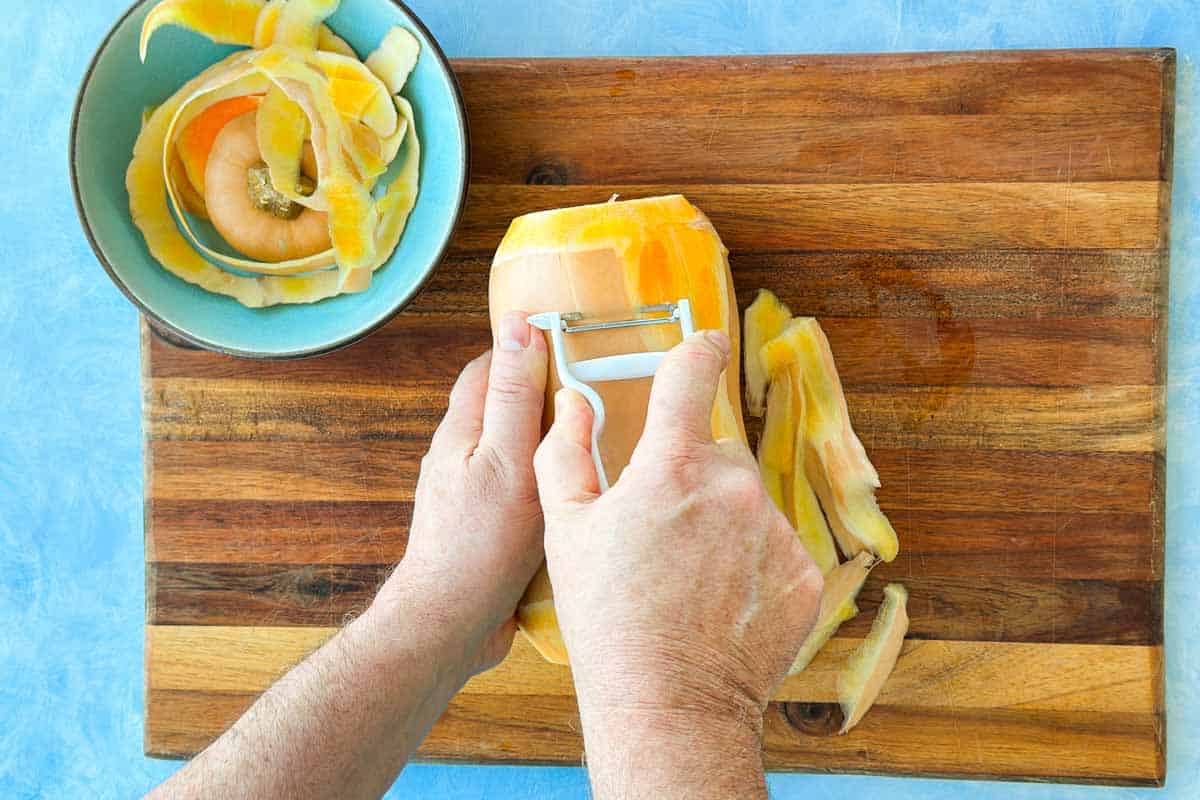

Once both ends are trimmed, stand the squash securely on one flat end.
Using a sturdy Y peeler, peel downward in long strips, rotating the squash as you work. Peel the straight neck first, then the rounded bulb.
Continue peeling until you remove the pale, fibrous layer beneath the skin and reach the brighter orange flesh.
Chef's Tip: You may need to go over some areas twice, as the skin can vary in thickness.
Do You Have to Peel Butternut Squash?
Not always. Choose whether to peel based on how you plan to use the squash.
For cubes, salads, gratins, and recipes where you want a smooth texture, peel the squash first. For some roasted preparations, including wedges or halves, you can leave the skin on.
How to Cut Butternut Squash in Half

Stand the squash upright on one of the flat ends. Carefully cut down through the middle, from top to bottom. Scoop out the seeds and stringy bits with a large spoon. Keep the seeds if you'd like to clean and roast them like pumpkin seeds.
You can roast butternut squash halves with or without the skin, depending on the recipe.
Chef's Tip: Butternut squash halves are perfect for roasting when you want soft, scoopable flesh for soups, hummus, pasta sauces, mac and cheese, or stuffed squash.
How to Cut Butternut Squash Into Cubes
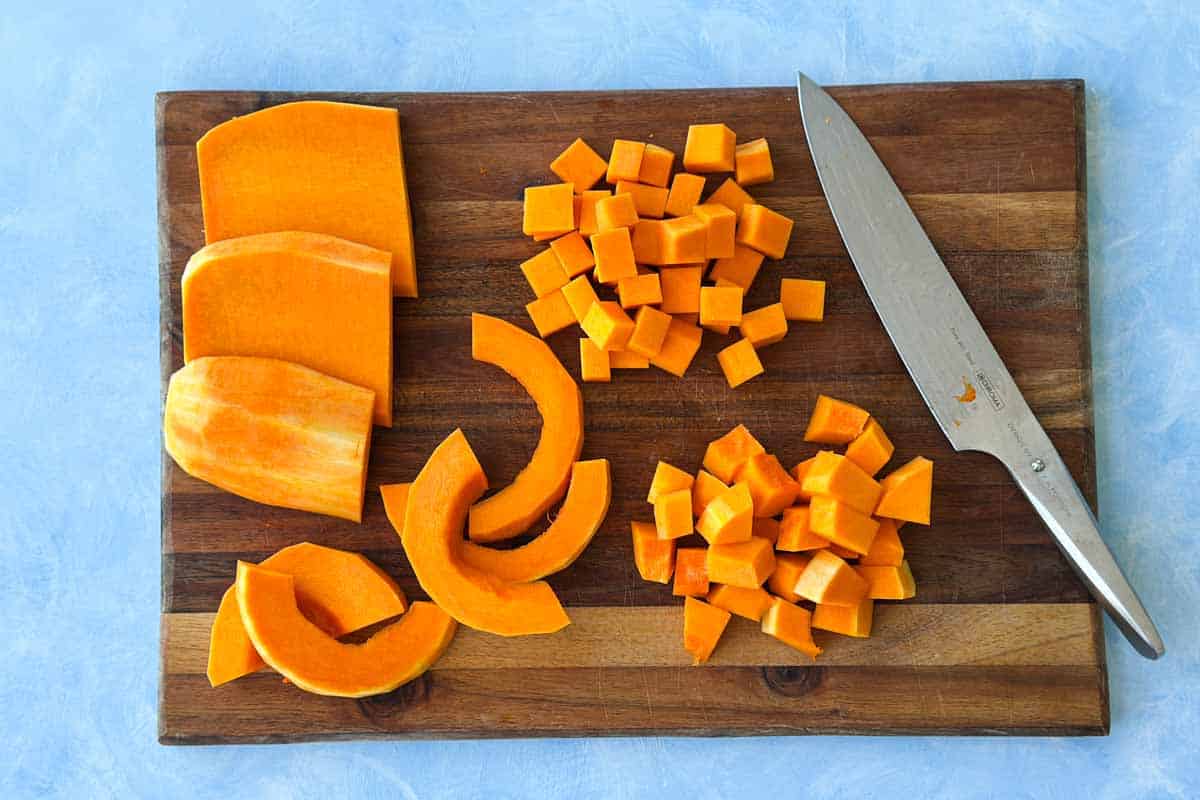
Butternut squash cubes are one of the most useful cuts for roasting, fall salads, grain bowls, soups, and meal prep.
Once peeled, cut the long neck away from the rounded bulb. Slice both sections into approximately 2.5 cm (1-inch) thick pieces, then cut each piece into cubes.
Chef's Tip: Try to keep the cubes roughly the same size so they cook evenly.
How to Cut Butternut Squash Into Wedges
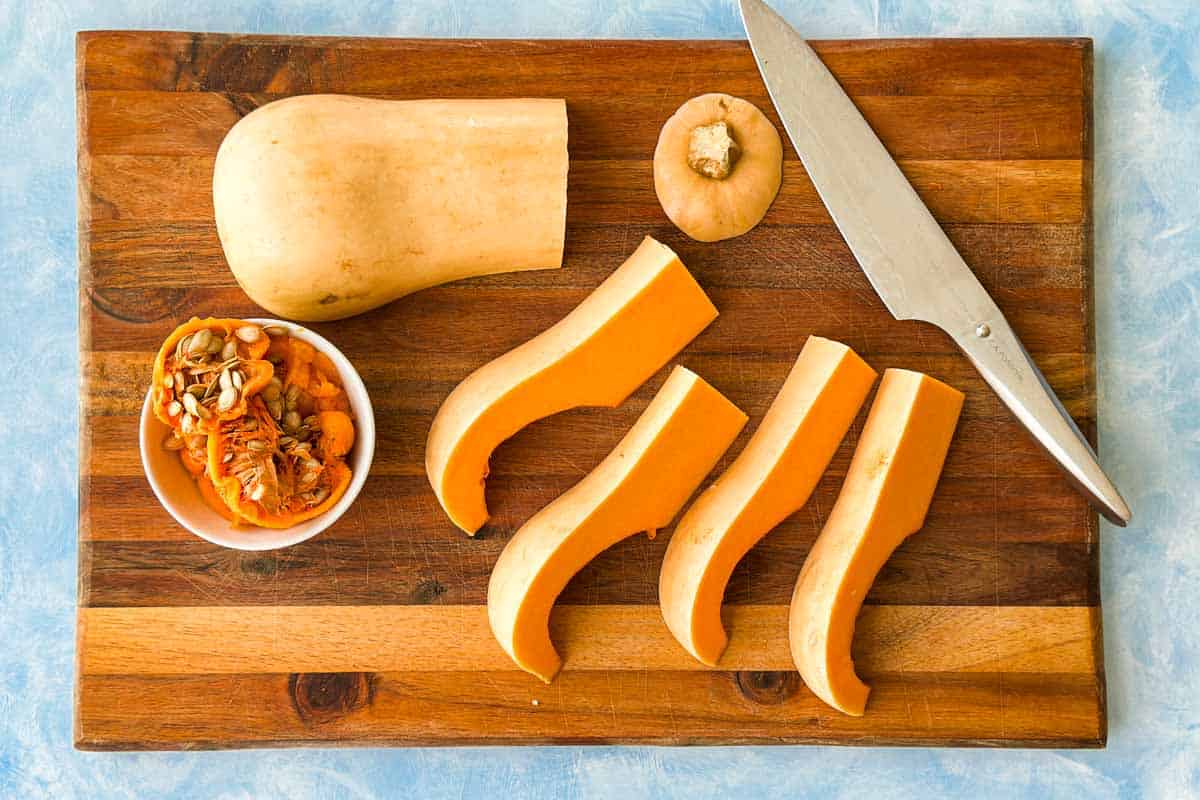
Start with a halved and seeded butternut squash.
Place it cut-side down, then cut lengthways into evenly sized wedges, following the natural curve. You can peel the squash first or leave the skin on, depending on your recipe.
Wedges are ideal for roasted side dishes and recipes with plenty of herbs and spices.
How to Slice Butternut Squash
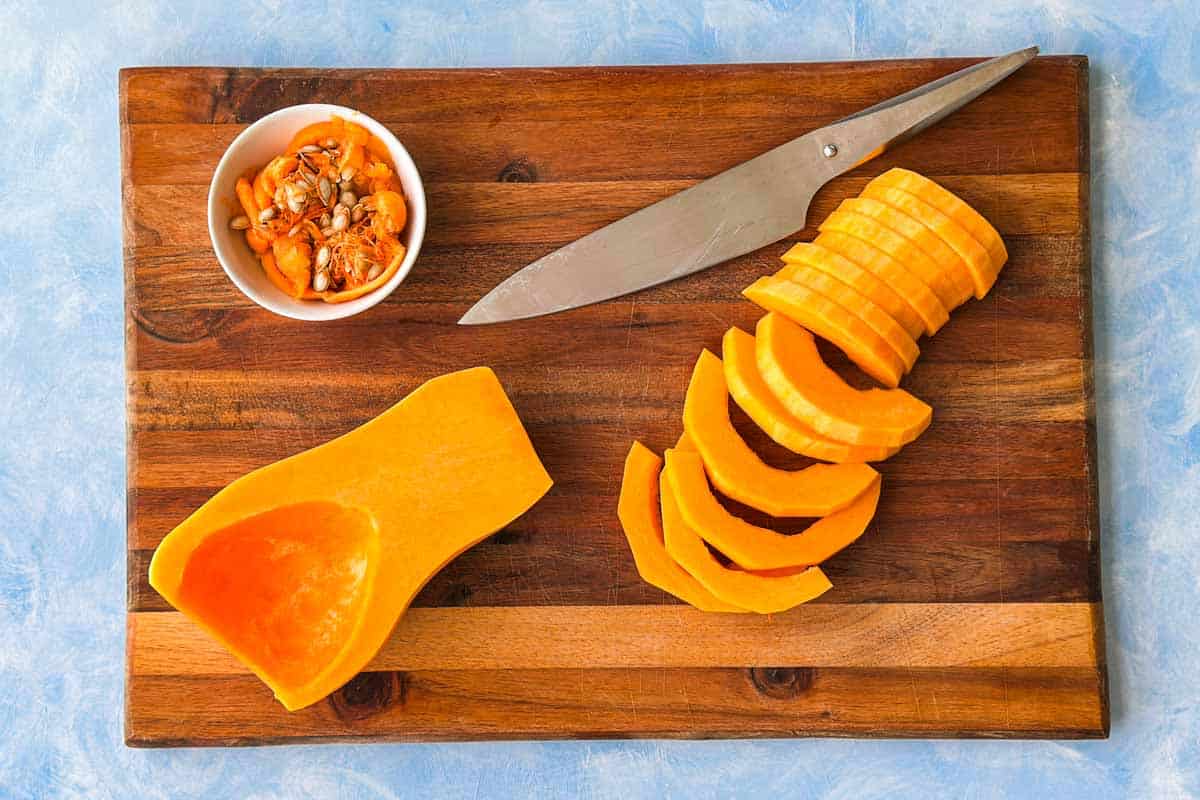
For half-moon slices, peel and halve the squash lengthways, then scoop out the seeds.
Place each half cut-side down and slice crosswise into approximately 1 cm (½-inch) thick slices.
Slices are ideal for roasting, gratins, layered dishes, or recipes that need a larger surface area.
How to Prepare Hasselback Butternut Squash
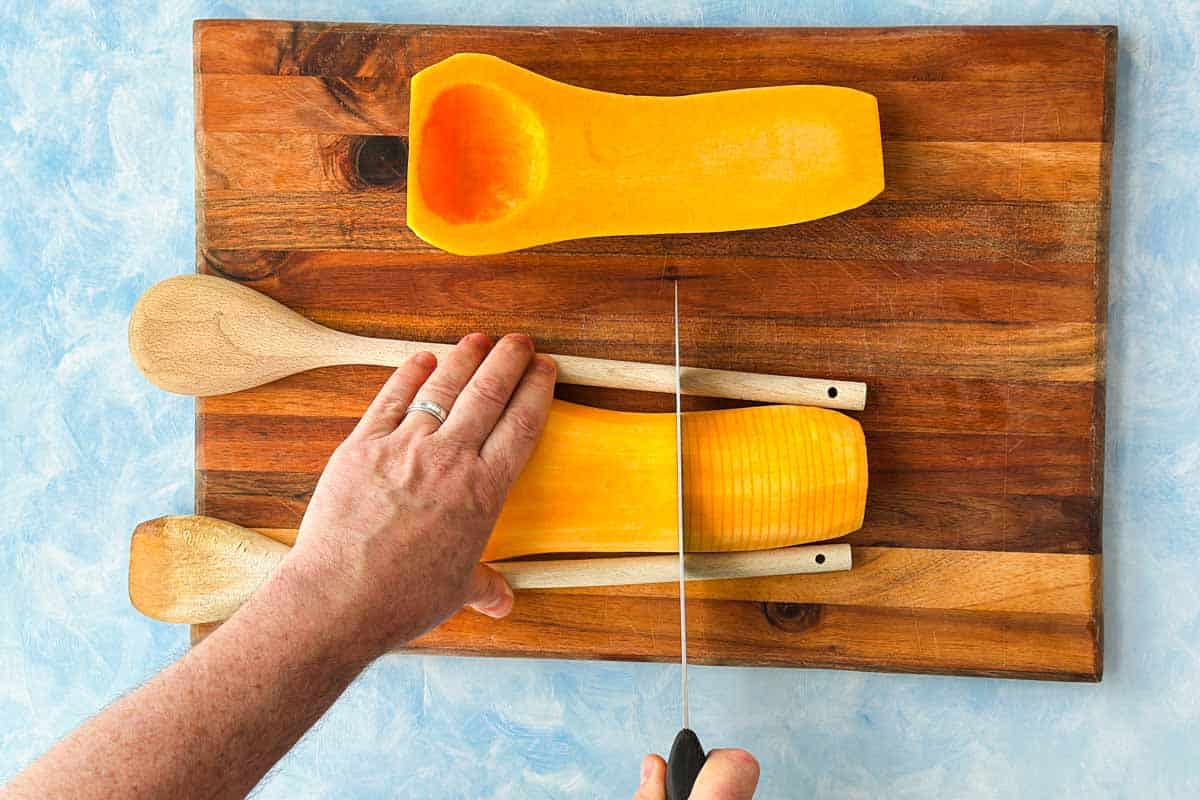
Peel the butternut squash, cut it in half lengthways, and scoop out the seeds.
Place each half cut-side down on your chopping board.
Lay a wooden spoon or chopstick along either side of the squash, then make thin crosswise cuts, stopping before your knife reaches the board. The spoons or chopsticks help prevent you from cutting all the way through.
Chef's Tip: Keep the cuts thin and evenly spaced so the squash fans out slightly and seasoning can reach between the layers.
Which Butternut Squash Cut Should You Use?
The best way to cut your butternut squash really depends on what you're making.
- Cubes - Best for roasting, salads, grain bowls, soups, and meal prep.
- Wedges - Lovely for roasted side dishes and herb- or spice-coated squash.
- Slices - Use for gratins, layered dishes, roasting, or recipes that need a larger flat surface.
- Halves - Good for stuffing or whenever you want soft flesh for soups, purées, hummus, or pasta sauces.
- Hasselback - A pretty presentation when the squash itself is the star of a fall or holiday side dish.
How to Store Cut Butternut Squash
Fridge: Place peeled or cut squash in an airtight container or ziplock bag and use within 3-4 days.
Freezer: Cubed butternut squash can be frozen for up to 3 months. For the best texture, blanch the cubes for 2-3 minutes, then cool them completely. Flash freeze in a single layer on a sheet pan before transferring to a freezer bag or airtight container. Use straight from frozen in soups, sauces, casseroles, or other cooked dishes.
FAQ's
A : The easiest way is to first trim both ends so the squash has a flat, stable surface.
If you're working with a large squash, separating the straight neck from the rounded bulb can make the pieces much easier to control. From there, you can halve, cube, slice, or cut each section according to your recipe.
A : Yes. If the squash is exceptionally hard, pierce the skin a few times and microwave it for approximately 2-3 minutes.
Let it cool until comfortable to handle before peeling and cutting. You only want to soften the outside slightly rather than cook it through.
A : Cubes and wedges are both good options, depending on the recipe.
Cut cubes to approximately 2.5 cm (1 inch) if you want smaller pieces with plenty of surface area, or use wedges for a larger roasted side dish.
More Butternut Squash Recipes
Once you've peeled and cut your squash, there are so many good ways to use it.
Try our:
- Roasted Butternut Squash Soup
- Stuffed Shells with Butternut Squash Sauce
- Butternut Squash and Sweet Potato Casserole
- Creamy Roasted Butternut Squash Sauce
- Healthy Quinoa Salad with Moroccan Roasted Vegetables
Butternut squash can certainly look a little intimidating sitting whole on the kitchen counter, but once you create a stable surface and break it down into manageable pieces, it becomes much easier to work with.
Master these few basic cuts and you'll be ready for all sorts of cozy fall and winter recipes.
Let us know in the comments which cut you use most often, and don't forget to Pin this guide for the next time a whole butternut squash lands in your kitchen.
Print
How to Peel and Cut Butternut Squash
- Total Time: 10-15 minutes
- Yield: 1 prepared butternut squash 1x
- Diet: Vegan
Description
Learn how to peel and cut butternut squash safely, with simple chef tips for preparing a whole squash into halves, cubes, wedges, slices, or Hasselback-style. Once prepared, it's ready for roasting, fall salads, soups, sauces, and all sorts of seasonal recipes.
Ingredients
1 medium butternut squash
Optional: olive oil, salt, and pepper if roasting straight away
Instructions
Wash and dry the butternut squash.
Place the butternut squash on a sturdy chopping board. Trim a thin slice from the top and bottom so it sits flat and doesn't wobble.
Chef's Tip: A sharp chef's knife makes all the difference here. Butternut squash is firm, so take your time and keep your fingers tucked safely away from the blade.
Use a sturdy vegetable peeler to remove the skin, working from top to bottom. Peel around the neck first, then around the round bulb end.
If the squash is very hard to peel, microwave it for 1-2 minutes to soften the skin slightly before peeling.
Chef's Tip: The pale layer just under the skin can be a little tough, so peel until you reach the brighter orange flesh.
Stand the squash upright on one of the flat ends. Carefully cut down through the middle, from top to bottom.
Scoop out the seeds and stringy bits with a spoon. Keep the seeds if you'd like to roast them.
You can roast butternut squash halves with or without the skin, depending on the recipe.
Chef's Tip: Butternut squash halves are perfect for roasting when you want soft, scoopable flesh for soups, hummus, pasta sauces, mac and cheese, or stuffed squash.
Cut the long neck away from the round bulb. Slice both sections into 2.5 cm (1 inch) thick pieces, then cut each piece into cubes.
For even roasting, try to keep the cubes roughly the same size.
Chef's Tip: The neck gives you neat, even cubes. The bulb section has a curved shape, so the pieces may be a little more rustic, and that's perfectly fine.
Cut the squash in half lengthways and scoop out the seeds. Cut each half into long wedges, following the natural curve of the squash.
You can leave the skin on for wedges, especially if roasting until tender and caramelized.
Peel the squash, cut it in half lengthways, and scoop out the seeds. Place each half cut-side down and slice into 1 cm (½ inch) thick half-moons.
These are lovely for roasting with sweet or savory seasonings.
Peel the butternut squash, cut it in half lengthways, and scoop out the seeds. Place each half cut-side down on a chopping board.
Place a wooden spoon or chopstick on either side of the squash half. Carefully slice thin cuts across the squash, stopping before you cut all the way through.
Chef's Tip: The spoons act as a little safety guard and help you create those lovely hasselback cuts without slicing through the base of the squash.
Notes
Peeler: We prefer a Y peeler for butternut squash because it gives you good control around both the straight neck and rounded bulb.
For very hard squash: Pierce the skin several times and microwave for 2-3 minutes. Allow it to cool before handling. This should soften the squash slightly rather than cook it through.
Storage: Refrigerate peeled or cut butternut squash in an airtight container and use within 3-4 days for best quality.
Freezing: Butternut squash cubes can be frozen, although their texture may soften after thawing. Blanching before freezing gives better long-term results.
- Prep Time: 10-15 minutes
- Category: Kitchen Basics
- Method: Preparation / Knife Skills
- Cuisine: Mediterranean



Leave a Reply