Description
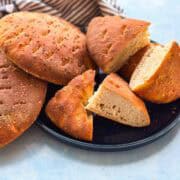
This Moroccan bread recipe (Khobz Kesra) makes soft, round loaves that are golden on the outside and fluffy on the inside. Baked fresh at home, this authentic khobz is perfect for scooping up tagines, dipping, or serving alongside appetizers or grilled meats. A staple of Moroccan cuisine, it’s simple to make with just a few pantry ingredients.
Ingredients
1 tbsp active dry yeast
2 tsp sugar
1 1/2 cups (375 ml / 12 fl oz) lukewarm water
700 g (about 5 1/2 cups / 1 lb 8 oz) all-purpose flour, plus extra for dusting
1 1/2 tsp salt
125 ml (1/2 cup / 4fl oz) lukewarm milk
1 tbsp yellow cornmeal (or fine polenta)Topping - 1 tbsp whole aniseed, sesame seeds or salt
Instructions
Method 1: Traditional Hand Kneading
1. Activate the yeast
-
In a small bowl, combine the yeast, sugar, and 125 ml (½ cup) lukewarm water.
-
Let it sit for 5–10 minutes, until foamy and bubbly.
2. Mix the dough
-
In a large bowl, sift both the flours and salt together.
-
Make a well in the center and add the activated yeast mixture, then add 250ml (1 cup) lukewarm water and 125 ml (½ cup) of lukewarm milk.
-
Mix with your hand or a wooden spoon until a shaggy dough forms.
-
Cover the bowl with a clean kitchen towel and set aside for 15 minutes.
3. Knead the dough
-
Turn the dough out onto a lightly floured surface. Knead for about 10 minutes, until the dough is smooth and elastic and springs back when an impression is made with your finger. (If the dough is still a bit sticky knead in a couple extra tablespoons of all purpose flour)
4. Shape the loaves
-
Divide the dough into 3 even pieces.
-
Shape each into a round ball, then roll out on a floured surface into rounds about 23 cm (9 in) for thicker bread or 26 cm (10½ in) for thinner loaves.
5. Rise
-
Sprinkle baking trays lined with parchment paper with cornmeal. Place the shaped rounds onto the trays. Reshape if needed.
-
Brush the tops lightly with water and, if using, sprinkle with aniseed, sesame seeds, or salt, pressing lightly to stick.
-
Cover with clean kitchen towels and leave in a warm, draft-free spot for about 1 hour, or until a slight indentation remains when pressed with your fingertip.
6. Preheat the oven
While the bread is rising, preheat the oven to 220°C / 425°F / Gas 7.
7. Prick and bake
-
Just before baking, prick the tops of the breads with a fork dipped in a little all purpose flour.
-
Bake in the preheated oven for 12–15 minutes, or until golden and the base sounds hollow when tapped.
8. Cool and serve
-
Transfer the loaves to a wire rack and allow to cool slightly.
-
Cut into wedges and serve the same day.
Method 2: Stand Mixer with Dough Hook
1. Activate the yeast
-
In a small bowl, combine the yeast, sugar, and 125 ml (½ cup) lukewarm water.
-
Let it sit for 5–10 minutes, until foamy and bubbly.
2. Mix the dough
-
In the bowl of a stand mixer fitted with the dough hook, combine the sifted flours and salt.
-
Add the activated yeast mixture, then pour in 250 ml (1 cup) lukewarm water and 125 ml (½ cup) lukewarm milk.
-
Mix on low speed for 1–2 minutes until a shaggy dough forms.
-
Cover the bowl with a clean kitchen towel and set aside for 15 minutes.
3. Knead the dough
-
On a medium speed, knead for 6–8 minutes, or until the dough is smooth, elastic, and pulls away from the sides of the bowl.
-
If the dough is still sticky after a few minutes, add a tablespoon or two of extra all-purpose flour.
4. Shape the loaves
-
Turn the dough out onto a lightly floured surface.
-
Shape each into a round ball, then roll out on a floured surface into rounds about 23 cm (9 in) for thicker bread or 26 cm (10½ in) for thinner loaves.
5. Rise
-
Sprinkle baking trays lined with parchment paper with cornmeal. Place the shaped rounds onto the trays. Reshape if needed.
-
Brush the tops lightly with water and, if using, sprinkle with aniseed, sesame seeds, or salt, pressing lightly to stick.
-
Cover with clean kitchen towels and leave in a warm, draft-free spot for about 1 hour, or until a slight indentation remains when pressed with your fingertip.
6. Preheat the oven
While the bread is rising, preheat the oven to 220°C / 425°F / Gas 7.
7. Prick and bake
-
Just before baking, prick the tops of the breads with a fork dipped in a little all purpose flour.
-
Bake in the preheated oven for 12–15 minutes, or until golden and the base sounds hollow when tapped.
8. Cool and serve
-
Transfer the loaves to a wire rack and allow to cool slightly.
-
Cut into wedges and serve the same day.
💡 Tip: Moroccan bread is often used as an edible utensil — perfect for scooping up tagines, dips, and salads.
Notes
Storage Instructions:
Fridge: Store in an airtight bag or container for up to 2 days. Refresh in the oven before serving.
Make Ahead: Prepare the dough through the first rise, then refrigerate overnight. Bring to room temperature before shaping and baking.
Freezer Friendly: Wrap the bread tightly in foil and place it in a zip-top bag. Freeze for up to 1 month.
How to Reheat: Splash lightly with water, wrap in foil, and warm in a 180°C / 350°F oven until heated through. Works for both thawed and frozen khobz.
- Prep Time: 20 mins
- Rising Time: 1 hr
- Cook Time: 20–25 mins
- Category: Bread
- Method: Baked
- Cuisine: Moroccan
Nutrition
- Serving Size: 1 serving (1/2 a bread)
- Calories: 449
- Sugar: 2.8 g
- Sodium: 615.4 mg
- Fat: 1.3 g
- Carbohydrates: 93.4 g
- Protein: 13.7 g
- Cholesterol: 0.4 mg